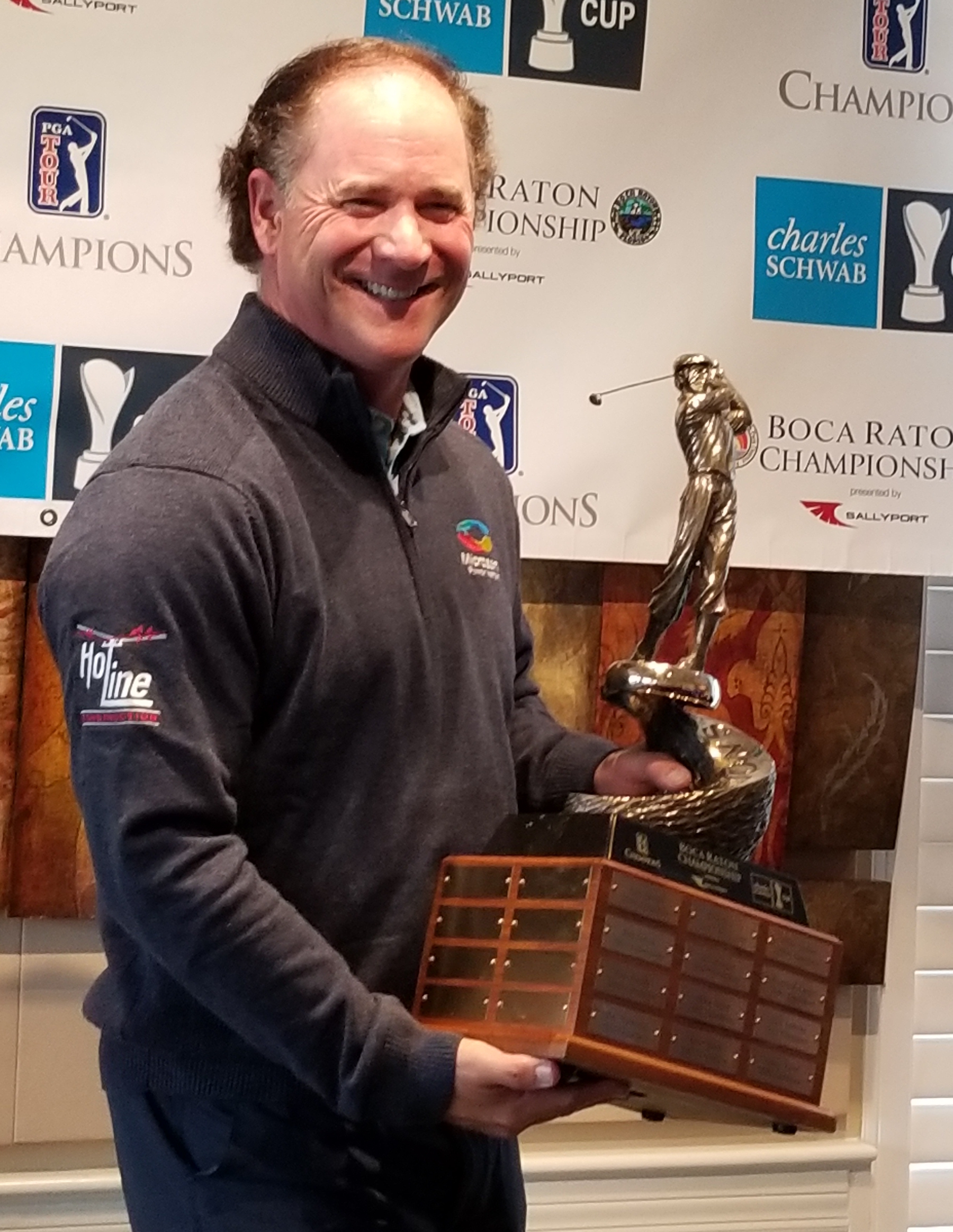
Defending champion Scott McCarron previews the first full field event on PGA Tour Champions while Eddie Carbone, the new tournament director of the Boca Raton Championship, looks on. BOCA RATON, Florida – PGA Tour Champions had a popular kickoff to its season with the Allianz Championship on the North Course at Broken Sound Golf Club. That sponsorship ended after the 12th playing of the event last year, but – other than a name change to the Boca Raton Championship – the event will go on with no loss in momentum.
The tournament will again be the first full field event of the season for PGA Tour Champions. Tournament week is Feb. 5-11 after the circuit conducts two small field events – the Diamond Resorts Invitational celebrity event next week in Orlando and the Mitsubishi Electric Championship in Hawaii from Jan. 15-20.
After those two events the circuit for 50-and-older stars will get into full swing albeit with some organizational changes.
Eddie Carbone, executive director of the U.S. Senior Open the last three years, has taken over as tournament director and the city of Boca Raton and its Parks and Recreation Department have stepped in to provide financial support. Sallyport, a global company that specializes in supporting military operations within complex environments, was named the presenting sponsor at. Wednesday’s media day kickoff.
“We’re entering a new era,’’ said Carbone, who had also spent a decade as executive director of the PGA Tour stop held at Trump National Doral near Miami. “We’re working hard to secure a new sponsor for 2019 and beyond.’’ Scott McCarron, who won last year with an eagle on the final hole, would like to take the champion’s trophy home from Broken Sound again.
Scott McCarron, the defending champion, is just happy the event is returning to Broken Sound.
“No one wants to lose this tournament. It’s a very popular tournament with PGA Champions players. We love coming here,’’ said McCarron, who thanked government officials for providing temporary financial support. “A lot of cities wouldn’t be willing to do that, and we want to keep this tournament going.’’
McCarron would also like to keep his hot streak, which started at Broken Sound last year, going as well.
He won at Broken Sound in dramatic fashion, hitting a 7-iron from 186 yards to six feet on the final hole and then holing the putt for eagle to nab a one-stroke victory over Kenny Perry and Carlos Franco. McCarron made two eagles in the final round en route to his sixth career win on PGA Champions.
Four of his victories came last year, when he led the circuit in birdies and eagles but couldn’t overhaul Boca Raton resident Bernhard Langer in the player-of-the-year race.
McCarron’s other wins included his first major title at the Constellation Senior Players Championship. That victory gets him into the PGA’s high-profile Players Championship with the PGA Tour’s best players at TPC Sawgrass in Ponte Vedra, FL., in May. He’ll defend his Senior Players win from PGA Champions at Exmoor Country Club in Highland Park, IL., in July.
Beware of the wall at the signature hole — the par-3 No. 13 with the island green at Ibis’ Legend Course. WEST PALM BEACH, Florida – This is what I was told.
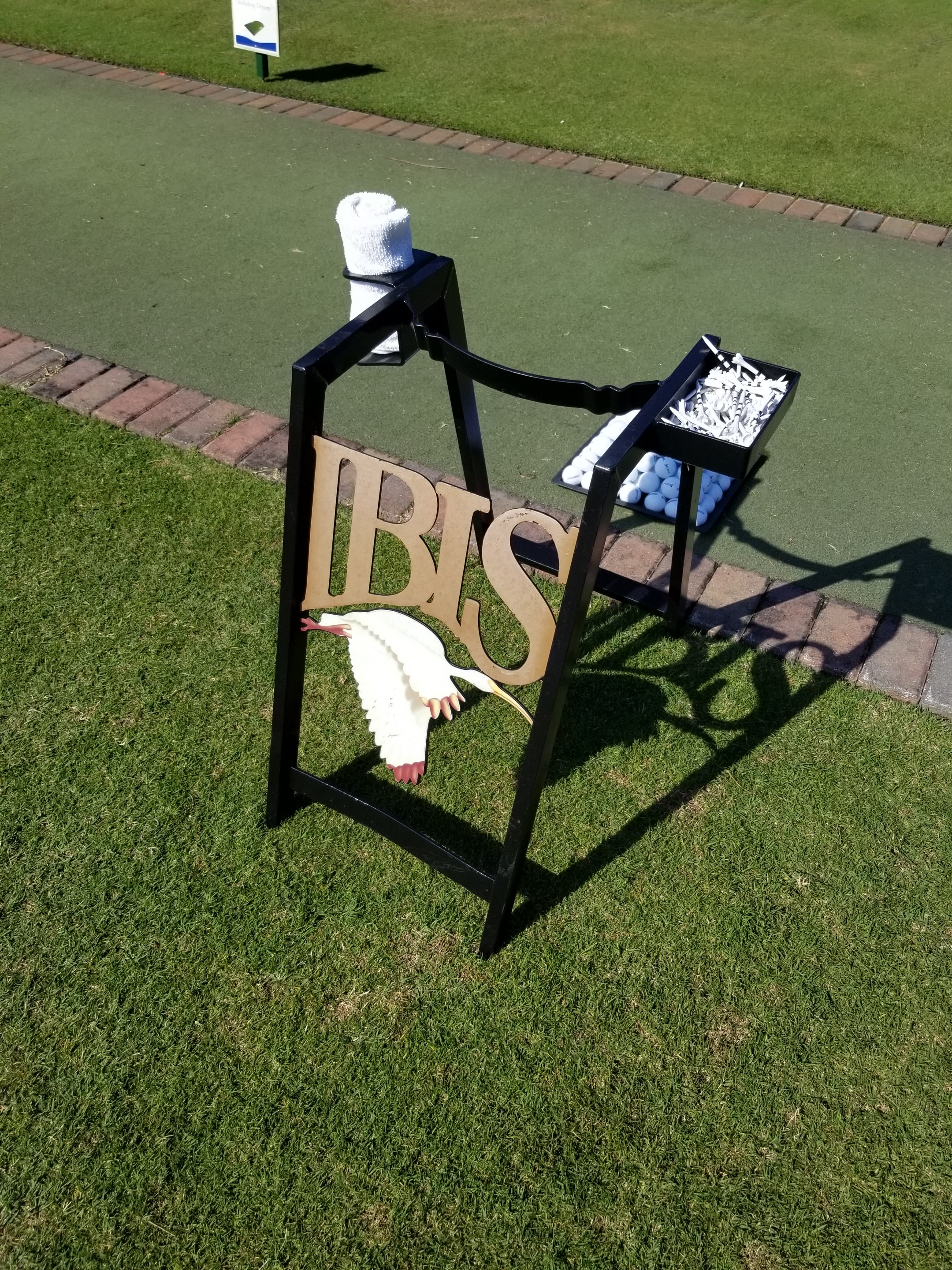
Jack Nicklaus designed the Legend Course at The Club at Ibis for an opening in 1991. More than 20 years passed, and club members asked Nicklaus to come back and check it out again. He did, and his immediate comment was `What was I thinking?’
In his early years in course architecture Nicklaus’ designs were frequently considered too penal. This was apparently one of them. The tournament player side of Nicklaus was more reflected in his course designs back then. He liked his courses to be challenging.
Having not played the original Legend, it was difficult for me to imagine what it had looked like before the current re-design was unveiled this month. (Nicklaus hit the ceremonial first tee shot on Dec. 13 and the course opened for play a week later).
According to a long-time nearby resident – a non-member who happens to be a scratch player, the new version “is more accepting to all types of players and conditions. It’s playability instead of brutality. Bravo!’’ Artificial turf isn’t made for golf, but it works as the entry and exit path to the Legend Course’s No. 13 green.
From my perspective as a first-time visitor I can’t imagine the Legend beating up any players. The fairways are extremely wide. The number of bunkers isn’t excessive, and those in the new design frame the landing areas quite well. The greens, already in excellent condition, are well contoured but provide fun for any player, be it a high or low handicapper, man or woman.
In short, this is a most enjoyable place to play. The course can welcome back big tournaments (it plays 7,442 yards from the tips) if the membership so chooses as well as stimulate beginning players (the front set of tees provides a course of only 4,492 yards.
The Club at Ibis is in the heart of Nicklaus country. In fact, it may be the center of it design-wise. Two of Nicklaus’ sons have also designed courses on the property, which is part of a gated community that requires those who live in its 1,900 residences to be members. Jack Nicklaus II, now the president of Nicklaus Design, created the immediately friendly Heritage Course, which also opened in 1991. Steve Nicklaus designed the Tradition Course, a links-style layout that opened in 2001.
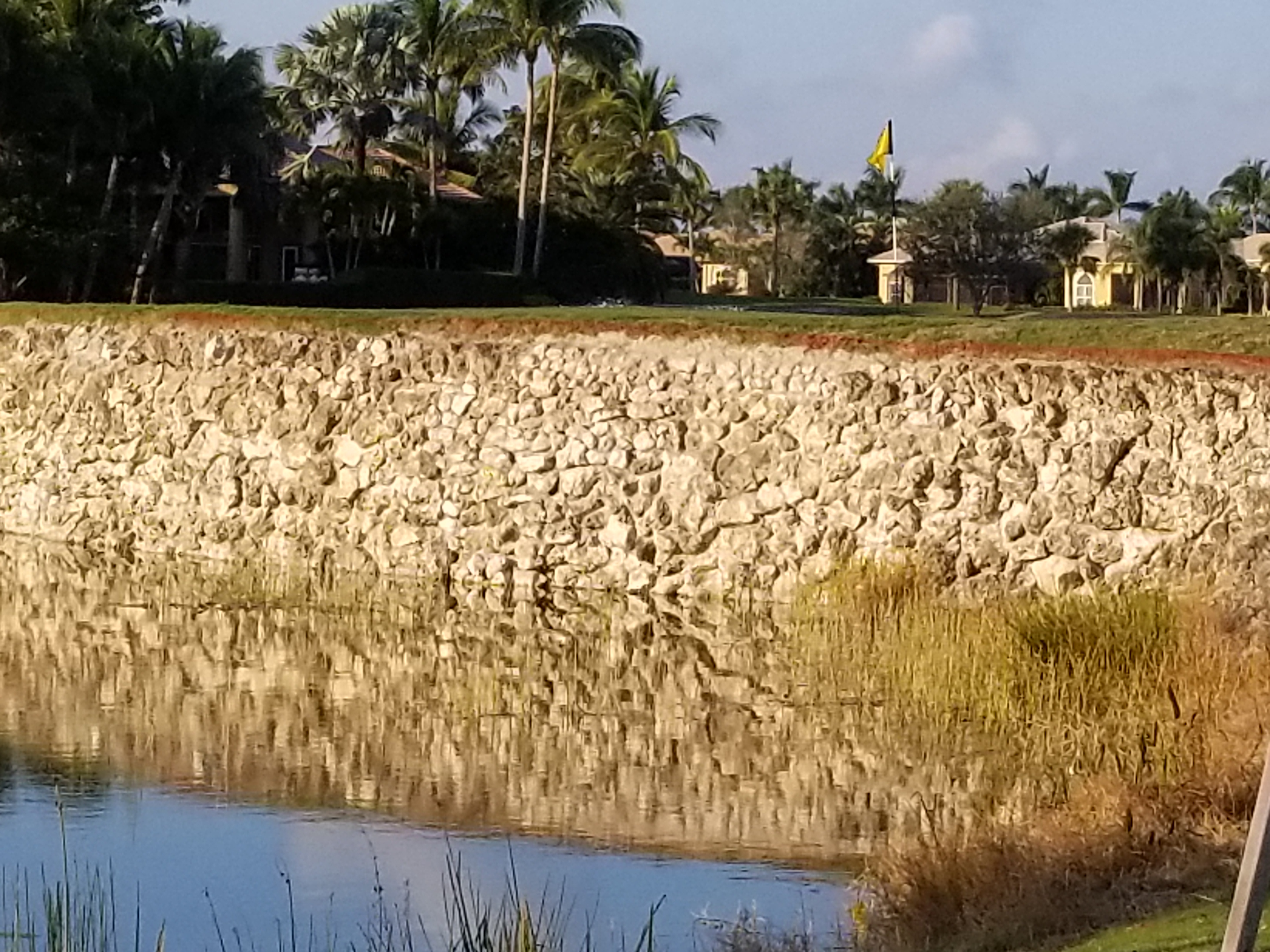
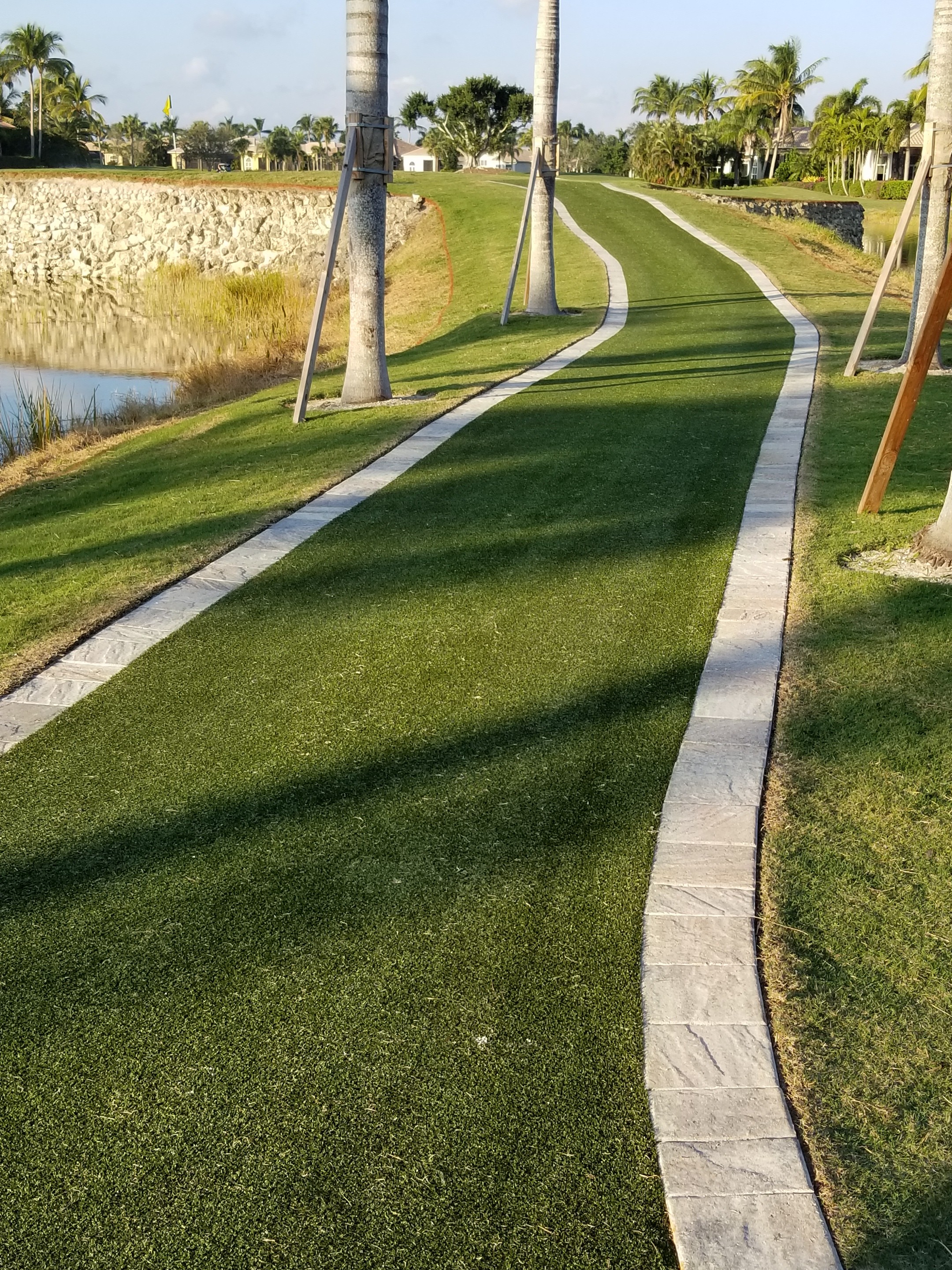
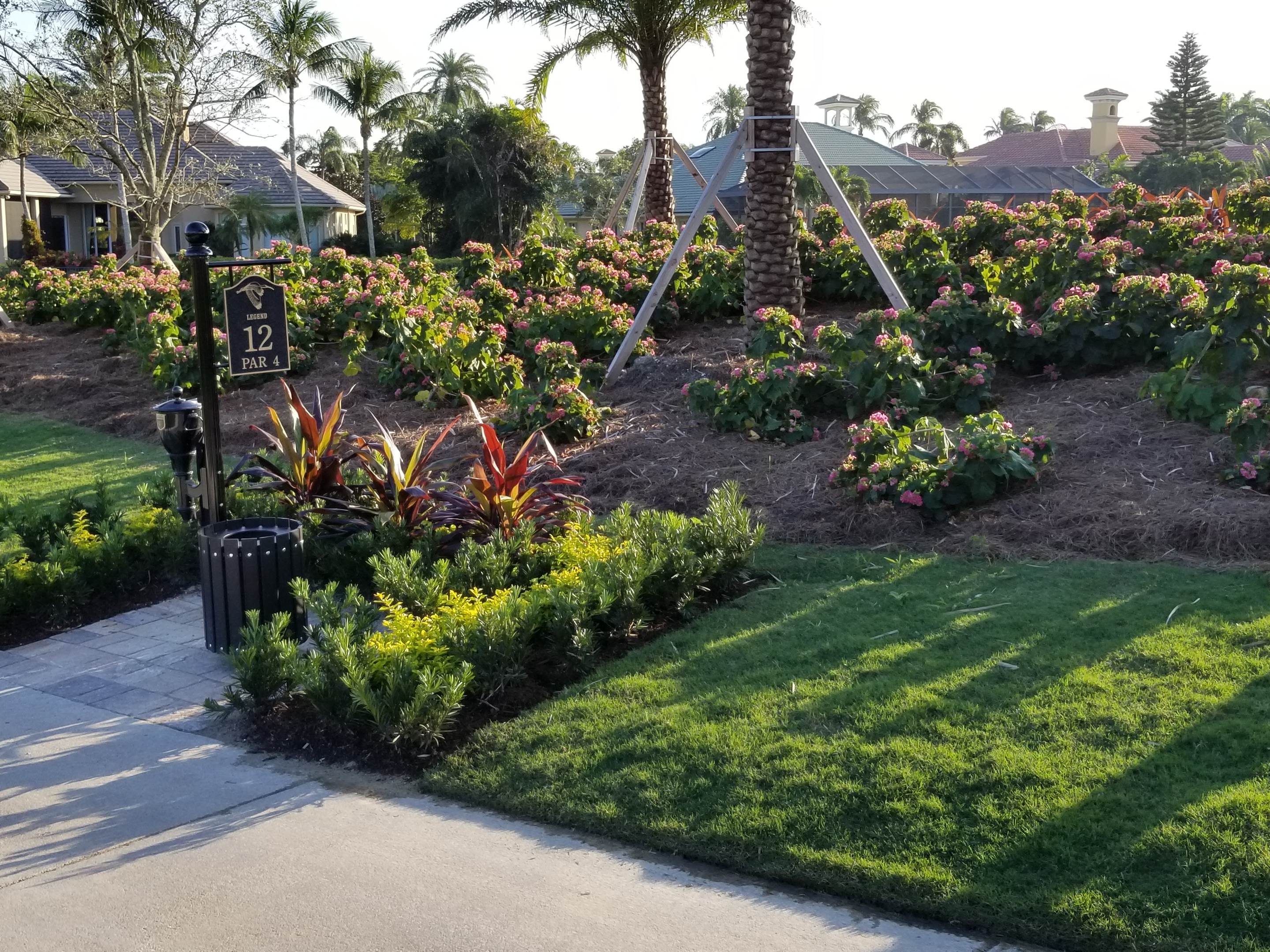
Nicklaus’ renovated Legend has a particularly scenic par-3 at No. 5 but a more memorable one at No. 13. This one has an island green, fountain in the water fronting the green and a path of artificial turf leading into the putting surface from behind the green. With those features there’s no denying it ‘s the course’s signature hole. The flowering is at its best around the No. 12 tee on this Jack Nicklaus renovation.
Jack Nicklaus, the one of Golden Bear fame, has been a resident of nearby North Palm Beach since the 1970s. His Bear’s Club, in Jupiter, has been a haven for established PGA Tour players since Nicklaus and his wife Barbara founded the club in 1999. Nicklaus also handled a 2014 redesign of the Champion Course at PGA National Resort & Spa in Palm Beach Gardens – just four miles from The Club at Ibis. The home of the PGA Tour’s annual Honda Classic, PGA National’s Champion Course features one of the sport’s most treacherous three-hole stretches from Nos. 15-17. It’s been declared, appropriately enough, “The Bear Trap.’’
As established as the Nicklauses are in south Florida, this year has been an extraordinary one for the clan. In November, a month before the opening of the Legend at The Club at Ibis, the patriarch of the clan oversaw the opening of the Banyan Cay Resort & Golf – another members-only club in West Palm Beach. A double-ended practice range has 75 hitting stations in addition to a teaching area led by Golf Channel’s Martin Hall.
This one is significant because it was the 300th course that Nicklaus created. Other designers have created more. Tom Bendelow designed over 600 in a 35-year career that started in the 1890s. Robert Trent Jones Sr. designed over 500 and Donald Ross over 400. None, of course, could rival the playing record that Nicklaus had to complement his architectural resume.
The Legend Course at the Club at Ibis may be Nicklaus’ most recent design but certainly won’t be his last. He and his staff of designers has 410 courses open for play in 39 states and 41 countries, and 57 more are under development in 19 different countries.
Over my nearly 50 years writing about golf I’ve played a wide range of Nicklaus courses, some high profile and some not. My favorite is one of the latter – The Club at Porto Cima, a private club in Missouri’s Lake of the Ozarks that opened in 2000.
Nicklaus was apparently quite proud of it, as the club’s website attributes this comment from him about the course: “On a scale of one to 10 this is as close to a 10 if there ever was a 10.’’
It’ll be hard to top that accolade, but Nicklaus has done so many quality courses that are special in their own way and to their own set of players. The Legend will stand up quite well to all of them. All three of the courses at The Club at Ibis were designed by members of the Nicklaus family.
A memorial service has been scheduled for 10 a.m. on Friday, Dec. 29 at Donnellan Funeral Home in Skokie to honor the memory of Carol McCue, a long-time leader in the Chicago golf community. She died on Saturday, Dec. 16, at the age of 94.
Long known as the First Lady of Chicago Golf, Miss McCue joined the fledgling Chicago District Golf Association in 1942 and retired as its executive director in 1982. While serving in that position she was named the first president of the International Association of Golf Administrators in 1968.
After retiring from the CDGA Miss McCue became the marketing director for Jemsek Golf, operator of several Chicago courses including long-time PGA Tour site Cog Hill in Lemont.
She was one of the first women in the golf industry to hold such a high-profile leadership role, and Dennis Davenport, who succeeded McCue as the CDGA executive director, called her “the gold standard for golf administrators.’’
“We are deeply saddened to hear of Carol’s passing,’’ said Robert Markionni, the current CDGA executive director. “She was a true pioneer and leader in golf administration, not only in Chicago but throughout the nation. Many of the programs that Carol initiated, such as public golf membership and computerized handicapping, revolutionized golf administration and set the stage for the innovative technology we use today. Her legacy will live on.’’
During her time with the CDGA Miss McCue was also instrumental in creating the Illinois Open, which made its debut in 1950 and is now conducted by the Illinois Section of the Professional Golfers Assn.
Prominent in Chicago golf in one capacity or another for over 70 years, Miss McCue was in the inaugural class when the Illinois Golf Hall of Fame was created in 1989.
Hensby provides explanation
Mark Hensby — a former Illinois Amateur, Illinois Open and John Deere Classic champion – has issued a statement on the one-year suspension he recently received for failing to provide a urine sample for a drug test required by the PGA Tour.
Hensby, 46, was asked to take the test after shooting a first-round 78 in the Sanderson Farms Championship in October. Feeling he could not produce a urine specimen at that time, he left the premises with the intention of taking the test before his second round the next day.
“I made a terrible decision to not stay around that event to take the urine test,’’ said Hensby in his statement. “Obviously in hindsight I should have been more patient, more rational and taken the test. Call me stupid, but don’t call me a cheater. I love the game. I love the integrity that it represents and I would never compromise the values and qualities that the game deserves.’’
Hensby received multiple calls and texts from PGA Tour officials inquiring about why he didn’t provide the urine sample prior to the suspension announcement.
“I showed poor judgement in not responding,’’ Hensby said.
Here and there
Rich Harvest Farms owner Jerry Rich is assured that his private club in Sugar Grove will remain a high-profile layout for tournament play. Rich Harvest had been selected to host the Western Junior Championship in 2019, the Big 10 Championship in 2020 and – most recently — the Palmer Cup in 2021. RHF previously hosted the Palmer Cup matches in 2015.
Wheaton’s Kevin Streelman has signed a two-year contract extension with Wilson Sporting Goods. Streelman, who has $16 million in PGA Tour winnings, first signed with the Chicago-based equipment manufacturer in 2011. The new agreement will run through 2019.
Wisconsin’s Sand Valley, the latest golf resort created by Chicago’s Mike Keiser, has achieved an impressive double in its first season. Golf Magazine named it the “Best New Course You Can Play’’ and Golf Digest selected the facility as its “Best New of 2017.’’ Keiser plans to open two more courses at Sand Valley in May – the par-3 Sandbox, designed by Bill Coore and Ben Crenshaw, and Mammoth Dunes, a David McLay Kidd design.
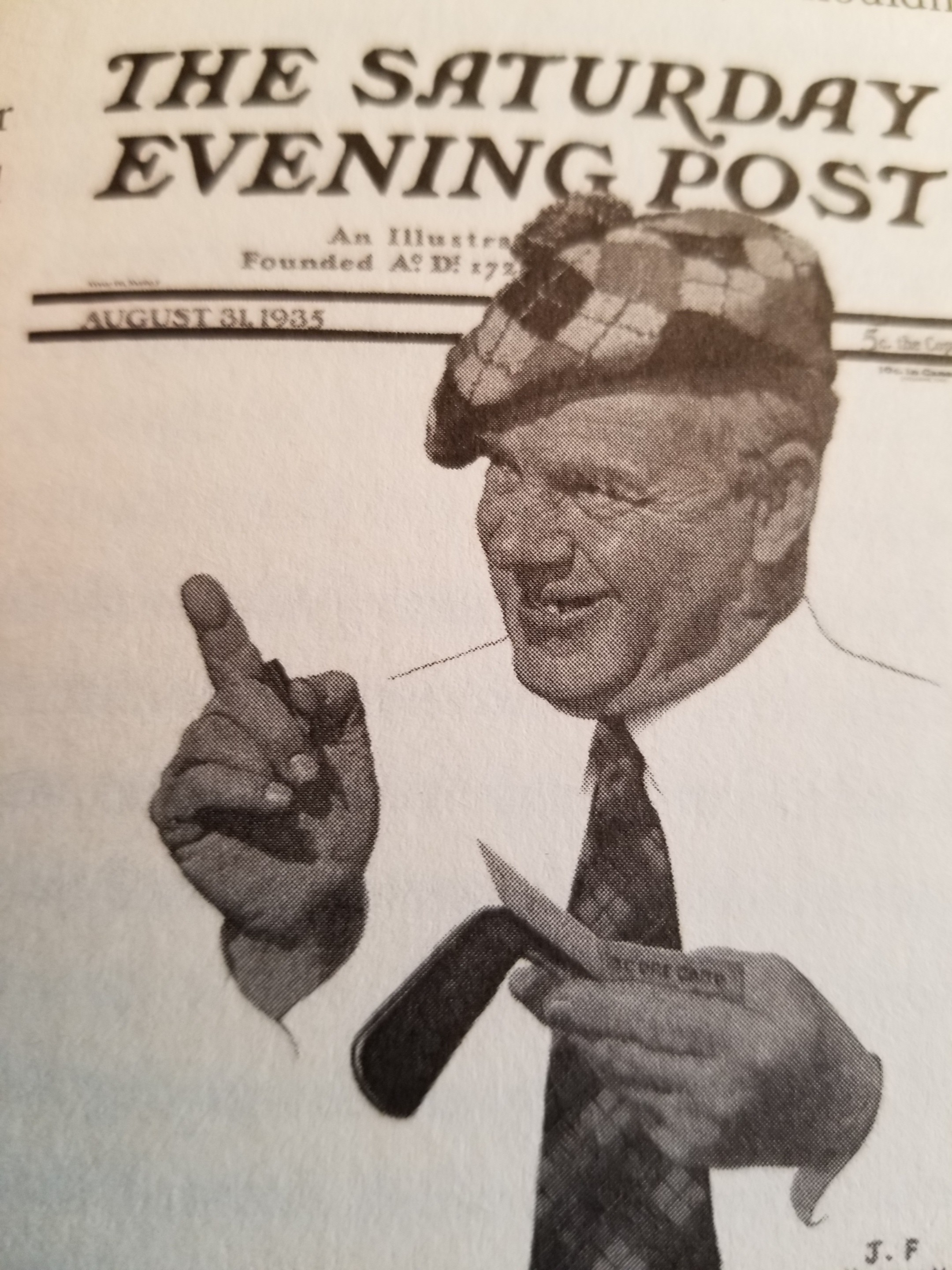
Ralph Kennedy made the cover of Saturday Evening Post in 1935. (Curtis Publishing photo).I have a new favorite golf hero, and his name isn’t Jack Nicklaus, Phil Mickelson, Jordan Spieth or even Tiger Woods.
Did you ever hear of Ralph Kennedy? Not many have. Kennedy died in 1961 at the age of 79. His claim to golfing fame didn’t come in winning big tournaments. It came from just playing. I doubt any golfer had the same love of the game that Kennedy had.
Kennedy took up golf in 1910, when he was 28 years old. Between his first tee shot at New York’s Van Cortlandt Park – the first public course in the United States – and his last recorded round in 1953 Kennedy played over 8,500 rounds on 3,165 different courses.
New Jersey-based golf writer John Sabino uncovered all the scorecards that Kennedy had donated to the U.S. Golf Association prior to his death and – very much to his credit — took it upon himself to tell Kennedy’s story.
Sabino’s report surfaced in his recently released book, “Golf’s Iron Horse,’’ which was published by New York’s Skyhorse Publishing, Inc. Sabino likened Kennedy’s feat with the 2,130 consecutive baseball games that Lou Gehrig played for the New York Yankees during his 17 big league seasons. Gehrig and Kennedy lived about six blocks apart during Gehrig’s baseball prime.
According to Sabino Kennedy’s total rounds of about 8,500 are the equivalent of a golfer teeing it up every day for 23 straight years. Kennedy averaged 75 new courses a year from his first round on July 9, 1911, until his last one on Sept. 27, 1953. They were all walking rounds, too, as power carts hadn’t arrived during Kennedy’s days on the links.
That’s not what most impresses me, however. Piling up rounds isn’t all that difficult. Lots of golfers play the same course over and over on an almost daily basis and Joe Kirkwood, a competitor in the early days of the pro golf tour, may have even played more total rounds than Kennedy. Kirkwood just didn’t document his rounds. He was more interested in tournament play and his trick shot exhibitions.
Instead, I’m most in awe of Kennedy’s penchant for travel to get to all his courses. I’ve done pretty well on that end, thanks to being blessed with jobs writing on golf for nearly 50 years. Never more than just an avid recreational player, I’ve played in 26 states and many have come in the last 10 years when my focus has been on Travel Destinations rather than tournament coverage.
My estimated courses played since my first one at age 11 in 1955 is about 600. They include a vast majority of the 400-plus courses listed in the Chicago District Golf Association membership area and 21 courses listed on Golf Digest’s Top 100.
Kennedy, by comparison, spread his rounds around the 48 of the states in the United States when he was playing. He also played courses in nine Canadian provinces and about another dozen countries. His course count total was determined off scorecards signed by him as well as a representative of each club played. On one day he played courses in four different states. On another he played four courses in the same day. Many times he played a round with just a 3- or 4-iron to reduce the physical demands required to carry a bag of clubs.
My greatest golf stunts pale by comparison — two 45-hole days in the early 1980s arranged to promote the Chicago Park District’s five nine-hole courses. I’m no Ralph Kennedy, that’s for sure.
In one area, though, I’m sure I beat out Kennedy. A vast major of my rounds have been over 18 holes. Kennedy couldn’t say that. Many of the courses in his count were nine-holers and some were even less than that. “Golf’s Iron Horse author John Sabino likens Ralph Kennedy to baseball great Lou Gehrig. (USGA photo).
No course was too insignificant or far away for Kennedy. He played in all sorts of weather on urban, rural, desert, mountain, parkland, moorland, links and heather courses. But, his courses also included cream of the crop venues like Augusta National, Cypress Point, Muirfield and Pine Valley.
So, how did Kennedy do it? Well, he had a wife who liked to play, too. Mary Alice Kennedy played over 600 different courses and they had no children. That opened up more time for playing and traveling.
Kennedy also had a job that encouraged his golf “hobby.’’ He was a traveling salesman for a major pencil company. He was apparently good at his job, too, as he was a founding member of New York’s Winged Foot – long one of America’s premier private clubs.
Sabino takes an unusual approach to telling Kennedy’s story. He focuses more on the climate of the changing times than he does on golf shots. When Kennedy entered college at Amherst the reigning U.S. Open champion was Harry Vardon and when he died Arnold Palmer held the Masters crown. In between the country was going through two world wars and plenty of other changes.
The game of golf changed a lot in that period, too. When Kennedy was born America had 38 states and no golf courses. America’s first 18-holer wasn’t built until Chicago Golf Club unveiled its prize layout in 1892.
In the early days of American golf many of the early courses had half-par holes, a different sized ball was used, there were no rakes in the bunkers and the stymie was a key part of the game.
Many of the courses that Kennedy played no longer exist including the last one, nine-hole Hamilton Inn Golf Club in New York. That round came the same year that golf was televised nationally for the first time at George S. May’s World Championship event at Tam O’Shanter in suburban Chicago.
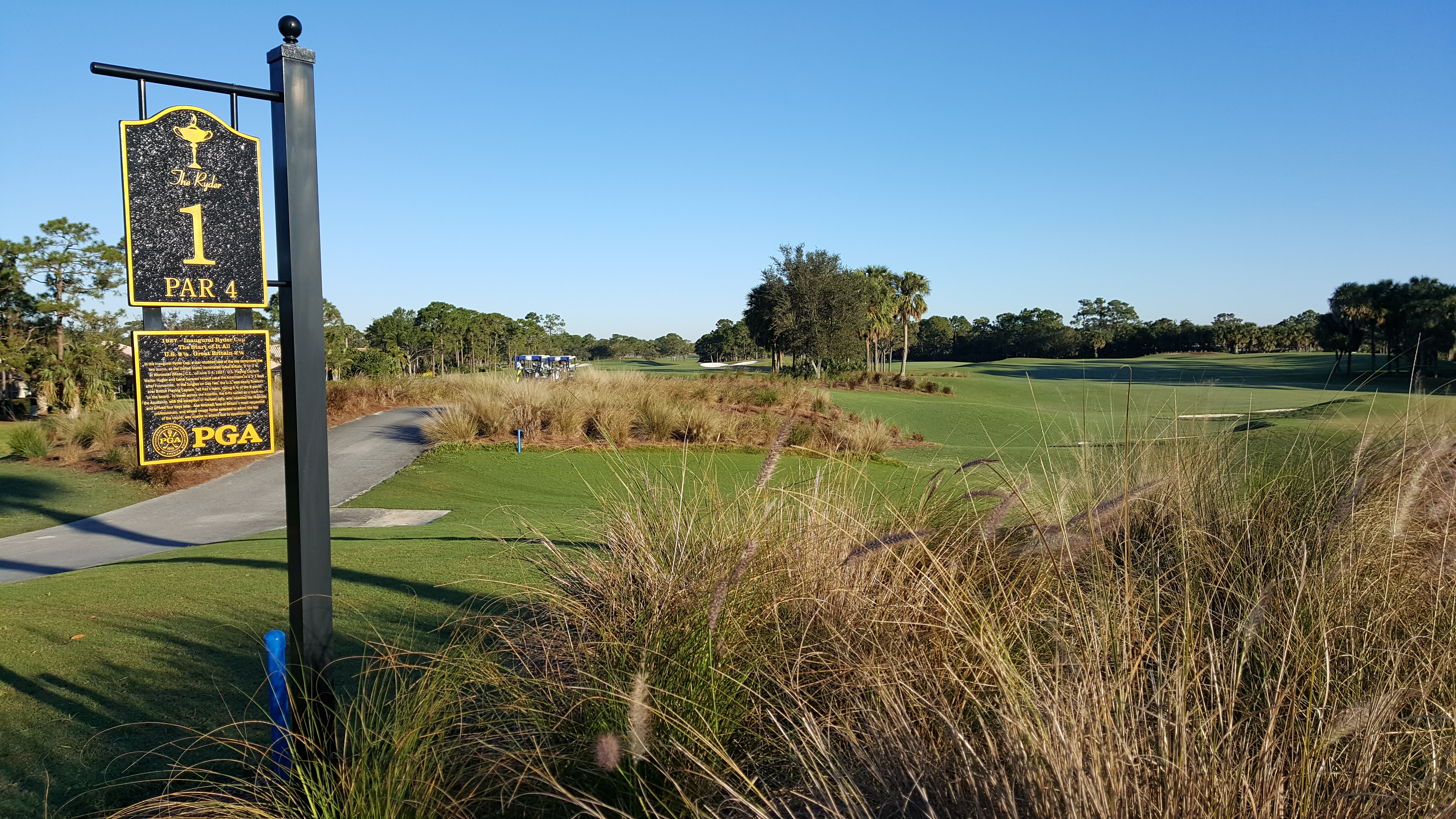
The Ryder Course has the most impressive first tee displays of all the PGA Golf Club courses. PORT ST. LUCIE, Florida – December’s re-opening of the Ryder Course merited a celebration at PGA Golf Club – the winter home of the PGA of America’s 29,000 members.
The first course to open at the premier resort on Florida’s east coast was the last of its three 18-holers to get a facelift during a hectic five-year period. General manager Jimmy Terry re-opened the Ryder for public play on Dec. 1 and formally celebrated the event two weeks later with a media contingent that was quick to recognize the magnitude of the work that had been done.
“We started five years ago, and this is a joyful occasion for us to wrap it up,’’ said Terry. “Honestly, there has never been a better time to be a part of PGA Golf Club.’’
The sometimes frantic five-year period began with the hiring of Terry and highly-decorated director of agronomy Dick Gray, whose leadership in the renovation of the three courses led to his being honored as the Turfnet Superintendent of the Year in 2016. There’s no higher award in his industry than that one, but Gray downplayed the work on the Ryder layout. He called it “basically a grass job,’’ but those who had played the course before the renovation quickly realized it was much more than that. The par-5 fourth hole became the Ryder’s most visually stunning hole after its recent renovation.
A little historical perspective is in order.
The PGA Golf Club opened its doors on Jan. 1, 1996, and the first tee shot was struck on what was then called the North Course. The second, called the South, was opened four months later. Both were Tom Fazio designs.
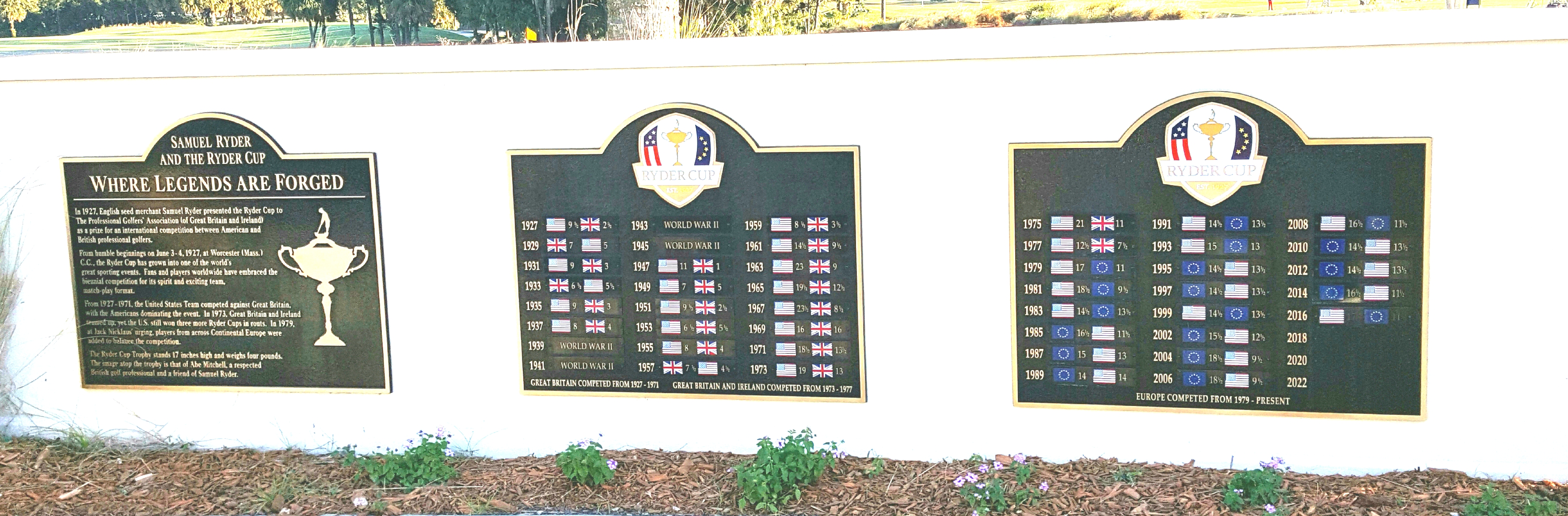
Ten years later those courses were renamed, the North becoming the Ryder in honor of Samuel Ryder – founder and namesake of the Ryder Cup – and the South becoming the Wanamaker, in honor of Rodman Wanamaker, whose name graces the trophy given annual to the winner of the PGA Championship. The Ryder features a colorful history display at the No. 1 tee and each hole has markers recounting big moments in the history of the match play competitions between the U.S. and European teams.
PGA Golf Club also has a third course, named in honor of its designer Pete Dye, that opened in 2000.
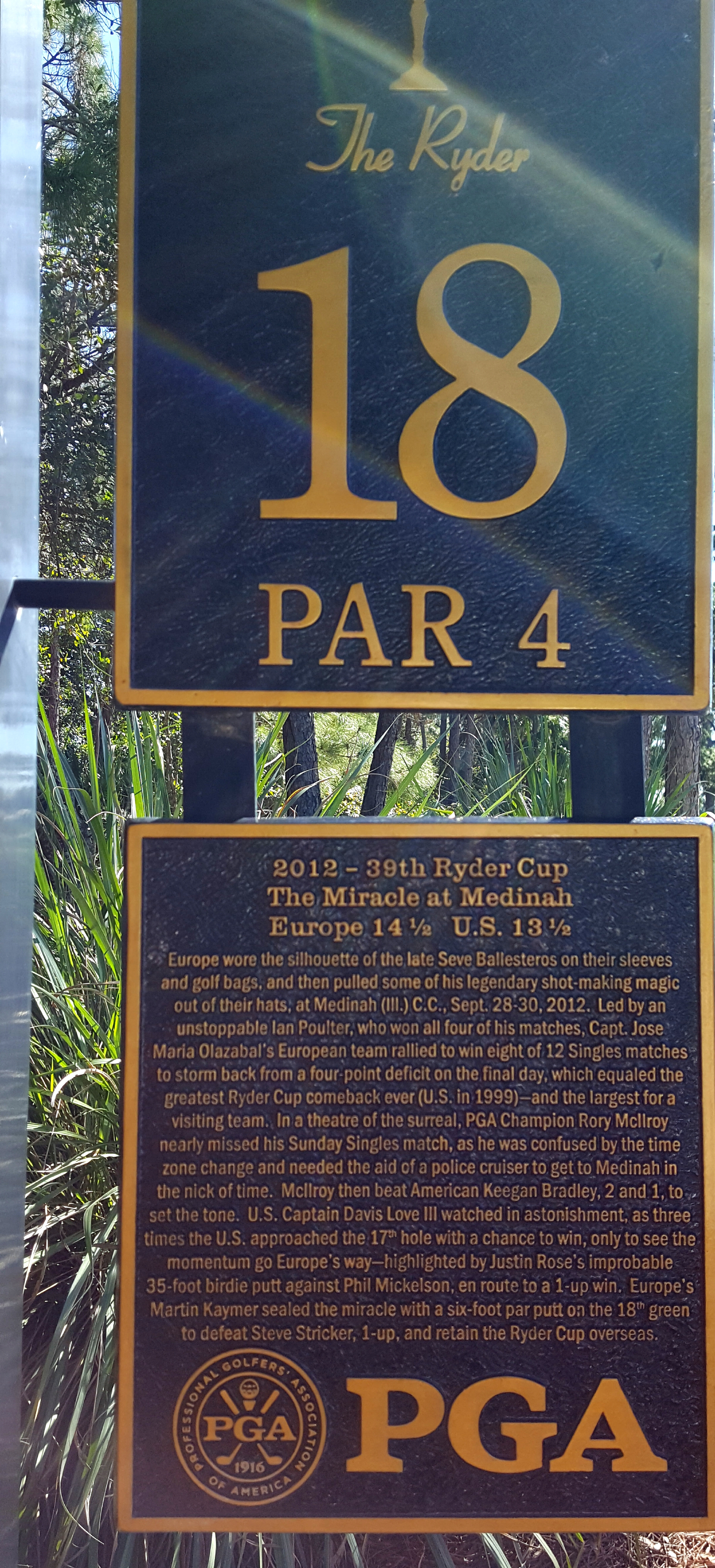
“The Dye is different just by its look,’’ said Gray. “The Ryder and Wanamaker, from being designed by Fazio, have a lot of commonality but they’re grassed a little differently.’’ The most memorable Ryder Cup at Medinah in 2012 is in the spotlight at the No. 18 tee of the Ryder Course. Click on photo for a better view.
Playing-wise, the Ryder has always been the most player-friendly of the PGA Golf Club courses.
“On the Ryder you don’t have to carry a tee shot over anything,’’ said Gray. “On the Wanamaker you’ve got to play over something (hazards), and that’s a big difference.’’
The Ryder still has its wide fairways and 11 lakes and ponds, but it also now has the same Celebration grass on its fairways and Tif-green putting surfaces that the Wanamaker and Dye layouts have.
“It’s now the same grass, the same quality of turf, on all three courses,’’ said Gray. “It should be consistent from green to green, hole to hole and course to course.’’
The change in grass, though, does create a new look from the old version of the Ryder.
“We reframed some of the holes, and that should change the look of the place and the way it plays,’’ said Gray. “Our players can read the hole from the tees better just because of the re-framing.’’
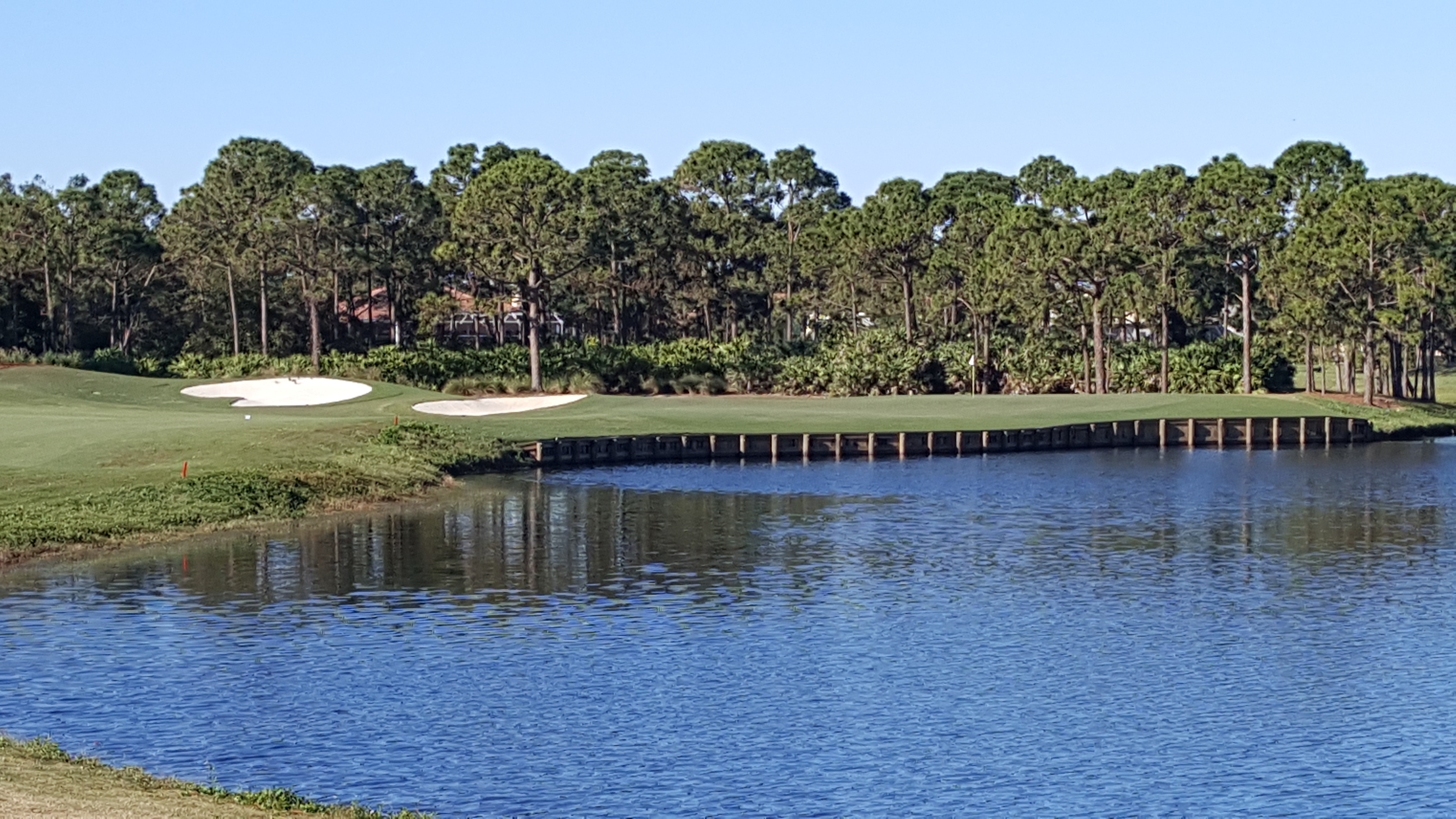
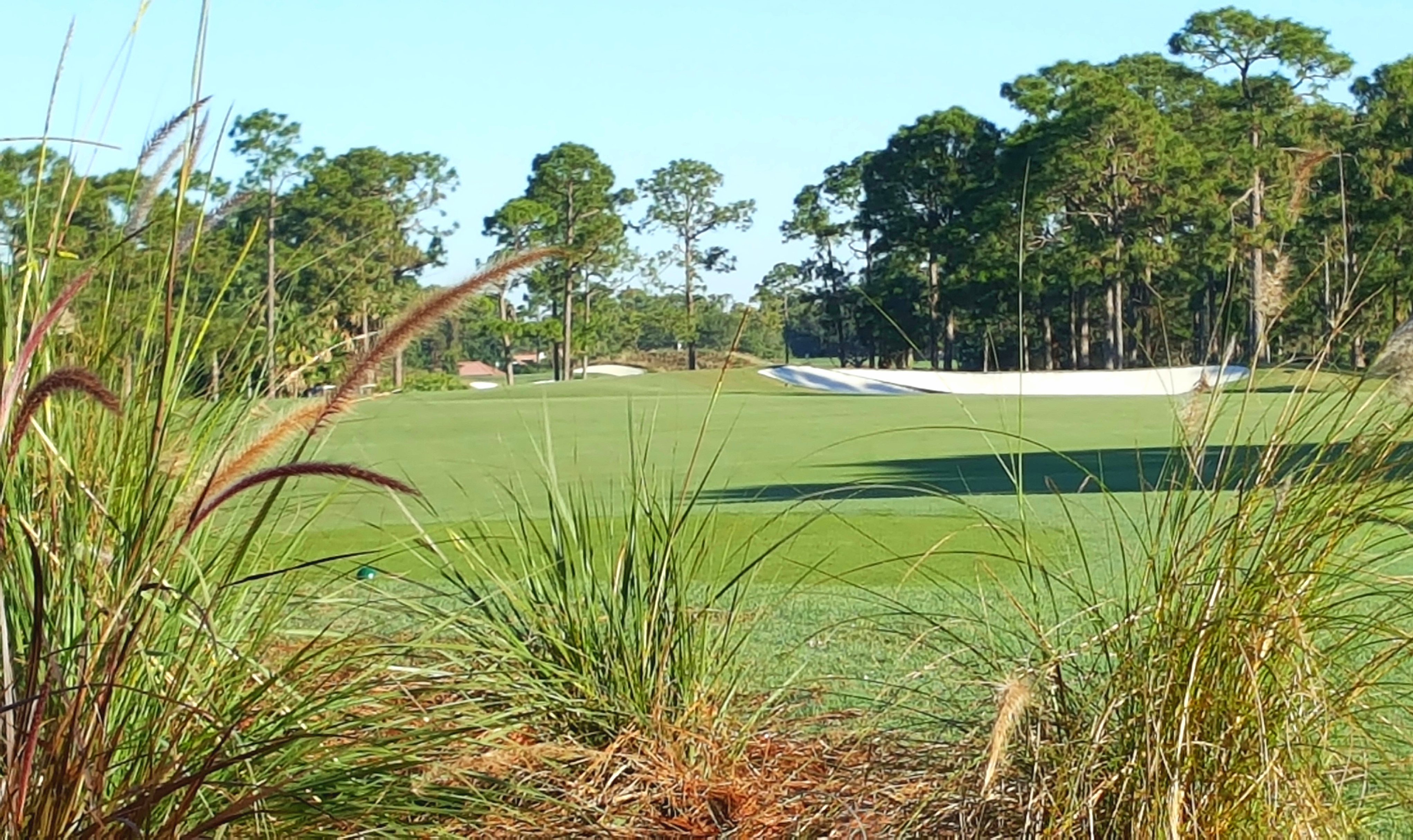
The hole that looks the most different on the Ryder since the renovation is No. 4, a par-5 that plays 484 yards from the tips. Water runs down the right side of the fairway and now comes into play more around the green as well. It’s the most visually stunning hole on the new course, but the new white sand bunkers are attractive throughout.
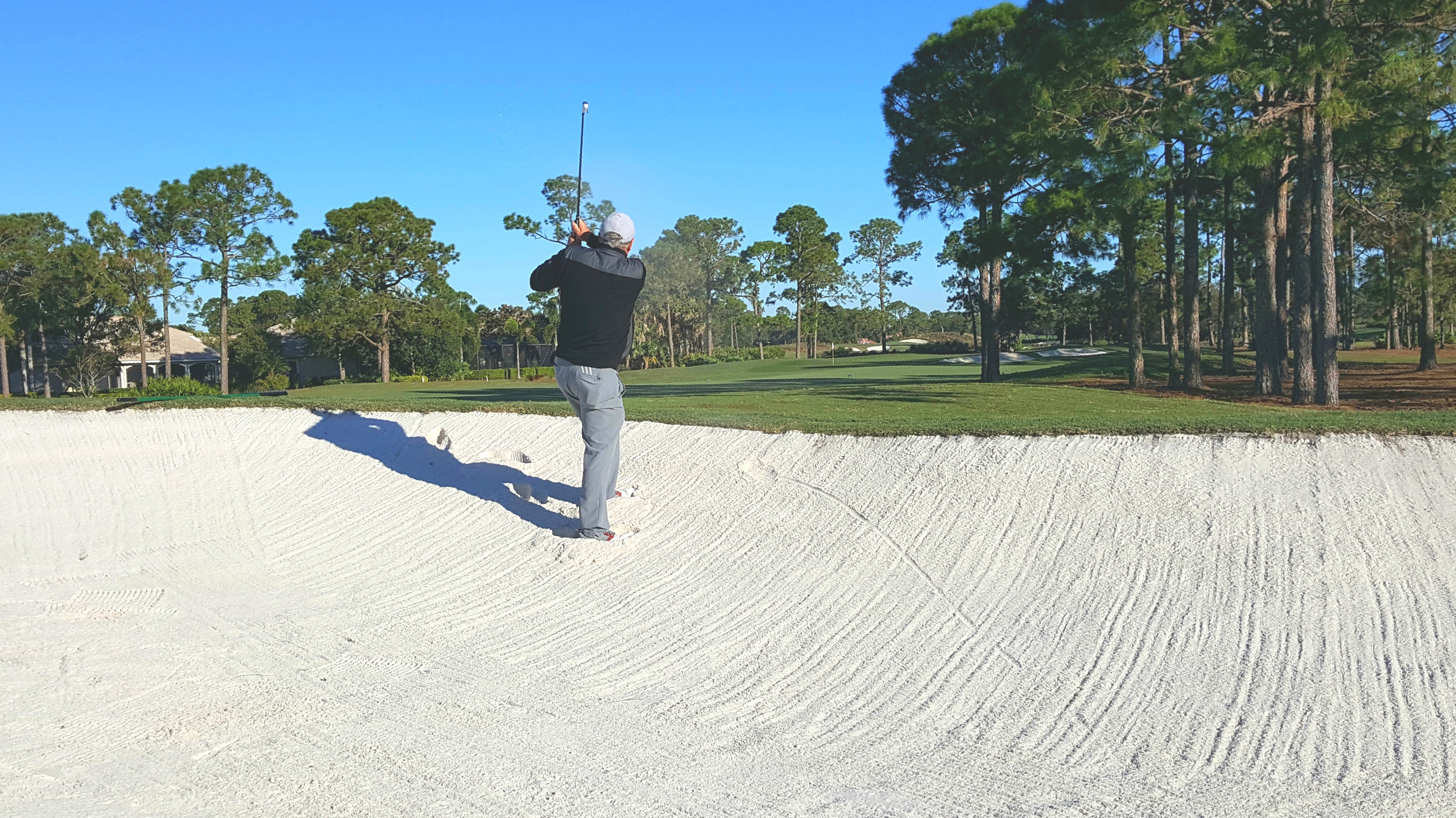
Course yardage is listed as an even 7,000 from the Medal, or back, tees. The first of the six tee placements is at 5,038 yards. Big, white sand bunkers were a consistent challenge after the Ryder Course renovation.
The Ryder renovation was not in the original sequence planned for the five-year resort-wide renovation. It was to be done immediately after the Wanamaker redo, but the plan was altered by the scheduling of a series of big events in the 2017 season. The second course to be renovated turned out to be the Dye, as the club staff feared that the Ryder might not be ready in time for this year’s big events. The Dye was re-opened in November of 2016.
Now all that decision-making is over, several golf publications have honored the work done, club membership is up to nearly 1,000 and its finances are, in Terry’s words, “much improved. All is well for PGA Golf Club and its nearly 250 work families.
“We’re charged with delivering an exceptional product,’’ said Terry. “We came on board with a five-year plan to re-establish the PGA Golf Club to a level commensurate with the reputation of the PGA brand. There’s an expectation that comes with that, and we’re not scared of those expectations. We spent over $15 million in renovations and capital projects to re-establish this place.’’
So what’s next?
“We’re not done. There’a few other things to finish,’’ said Terry. “We’re at the next stage.’’
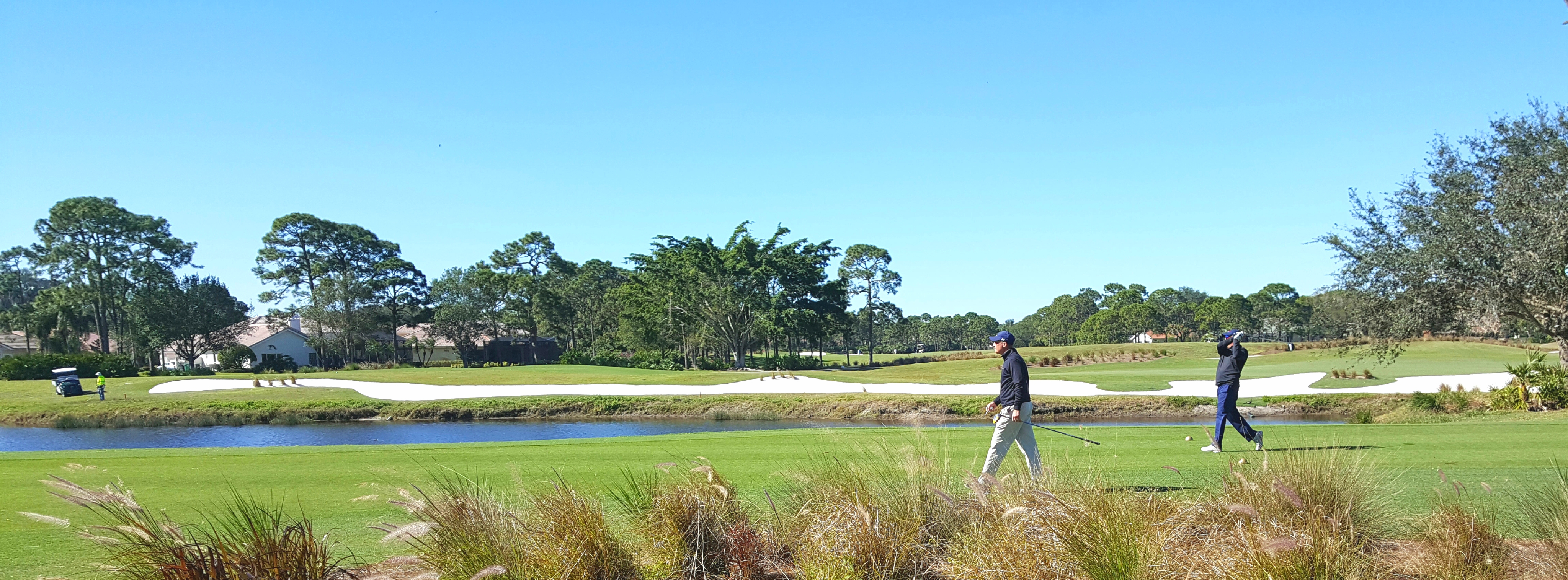
Sale of the fourth course, St. Lucie Trail, and the 35-acre PGA Learning Center will likely impact the timetable for when those “other things’’ will be addressed. Terry said there have been offers made on those properties but completion of the sales is not imminent. Between the 11 lakes and ponds and striking bunkers the Ryder Courses offers lots of good views.
The lengthy, very demanding qualifying sessions to determine next year’s players on the PGA Tour, Ladies PGA Tour and PGA Champions circuit came to an end over the weekend with two Chicago hopefuls — Brad Hopfinger and Samantha Troyanovich — putting themselves in position to further their golfing careers in 2018.
Lake Forest’s Hopfinger, one of only seven players to own titles in both the Illinois State Amateur and Illinois Open, is assured a spot in the first eight tournaments on the PGA’s satellite Web.com Tour next season. Troyanovich, who won the 2012 Illinois Women’s Open as an amateur, earned conditional status on the LPGA circuit.
Getting as far as they did wasn’t easy. The Q-Schools for both circuits are complicated, nail-biting affairs that span nearly four months. On the men’s side, there are three pre-qualifying tournaments that start in August in Texas, California and Nebraska. Those events determine who fills out fields in the Stage I eliminations, which were played at 11 sites around the country in October.
The survivors of Stage I played in one of the five Stage II events, each of which had about 80 players, and those survivors went to the final stage. Some players had exemptions through the early stages based on past performance, but Stage III started with 144 players and ended after 72 holes on Sunday in Chandler, Ariz., with Hopfinger finishing just one stroke better than two other prominent Chicago players – Deerfield’s Vince India and Elgin’s Carlos Sainz Jr.
That one stroke made a big difference, however. Hopfinger, by virtue of finishing at 14-under-par 274 and in a tie for 42nd place, is assured a spot in the first eight Web.com Tour events of 2018. Then there’ll be a re-shuffle of players.
Hopfinger played frequently on the Web.com in 2017, earning $30,904. While he will be in a better position to get into tournaments in 2018, he’ll have to get off to a good start to keep playing. Still, he’s in a much better position than India, his former college teammate at Iowa, and Sainz, the 2016 Illinois Open champion.
India, who was third overall in the Web.com qualifying in 2016 but didn’t earn enough money in 2017 to retain his card, shot 63 in the third round of the Q-School’s third stage on Saturday and Sainz, who spent much of this season on the PGA’s Latinoamerica Tour, had a solid 66-67 finish on the weekend.
That’s great golf, but both still finished at 13-under-par for the tournament and in a tie for 57th place. They will likely need to go through Monday qualifiers to get into next year’s tournaments. And that’s only to play on the PGA Tour’s satellite circuit. Make it to the PGA Tour proper has demands even more stringent than that.
Addison’s Tee-K Kelly, in his first season as a pro after a strong collegiate career at Ohio State, also made it to last week’s Stage III but an 80 in the first round doomed his chances at advancement. Kelly, though, had a promising rookie season. He won an event on the Latinoamerica circuit and had five top-10 finishes while finishing seventh on the circuit’s order of merit.
Troyanovich, who now resides in Michigan, also had to endure three stages to get her LPGA playing privileges. She tied for 38th of 144 players in Stage I, which was contested in California. The top 90 advanced, and she tied for 68th among 165 players in Stage II in Venice, FL., with the top 80 moving on to the final stage.
The final, played over 90 holes at LPGA International in Daytona Beach, FL., had 361 finalists. Troyanovich tied for 32nd place and that will be enough to get into at least a few 2018 tournaments without enduring a qualifying round.
Troyanovich has had only limited playing time on the LPGA circuit (three missed cuts in as many starts in 2017) and its satellite Symetra Tour. Next year she’ll be able to play more on both circuits.
One Chicago player, Lance Ten Broeck, was in the PGA Champions qualifying tournament in Scottsdale, Ariz. A former PGA Tour regular, he finished in a tie for 23rd place and needed a top five finish to get fully exempt status on the 50-and-over circuit. He figures to return to his job as a caddie on the PGA circuit in 2018.
The Illinois PGA has few members to rival Katie Pius. In fact, there really aren’t any with the background that this assistant professional at Biltmore Country Club in North Barrington has.
Gender-wise the Illinois Section is noteworthy in having, in Carrie Williams, one of the three women to hold executive director posts in the PGA of America’s 41 sections. And, this year Carol Rhoades became the first woman to be named the section’s professional of the year in 62 years. Numerically, though, the IPGA includes just 31 women among its approximately 800 members and apprentices.
Playing-wise, of those select 31 Pius is the best of them all by a long shot and she has even held her own against the men in several Illinois PGA Championships.
Earlier this year Pius was named to the athletic Hall of Fame at her college alma mater, Methodist University in Fayetteville, N.C. Then Katie Dick, she played on four teams that won the NCAA Division III national championship and she was the individual champion at that level in her junior season.
In 2005, her first year at the school, the National Golf Coaches Association named her its Freshman of the Year. A four-time first team All-American, she was part of Methodist’s astonishing string of 13 consecutive national championships from 2000 to 2012.
“I don’t know why I decided to go there, but I did luck out,’’ she said. “I just wanted to go to a small school, and I hadn’t played much junior golf growing up. I wasn’t in the AJGA (American Junior Golf Association) stuff.’’
Growing up in a small town on the outskirts of Youngstown, Ohio, didn’t keep Dick from achieving her goal of becoming a golf professional. She decided to attend Methodist Monarch because she would be able to play golf at a school that offered a PGA internship program. When she graduated in 2008 she had both her PGA Class A card and a degree in business.
Most players with her collegiate success would be tempted to give professional tournament golf a try, but not Dick. She still loves to compete but is doing it as the only woman in otherwise all-male fields in the IPGA tournaments.
“I just didn’t have the practice mentality,’’ she said, “plus, on the Futures (now Symetra) Tour you couldn’t make a living. I have tried the U.S. Open qualifiers because they’re a one-day thing, but playing tournament golf would be such a different life.’’
The life she has now is just fine, thank you. She is married to Josh Pius, the head professional at Inverness, and they became parents of daughter Betty who turns 2 in December. In being Lake Zurich residents, both have short drives to their respective clubs.
“I never thought I’d marry a golf pro,’’ said Katie, “but it’s worked out for us. We both get Mondays off. I don’t know that we’d ever work together, but I do understand the long hours he has to put in at times.’’
Josh had a similar collegiate experience as Katie. He attended Michigan’s Ferris State, which was a pioneer institution in creating programs for those who wanted to enter the golf industry.
As part of her college studies she spent two summers doing internships, one of which was at the famed Jim McLean Golf School at Doral Resort in Florida. She also interned at Lakeshore Country Club in Glencoe before beginning her run of assistant jobs at three of Chicago’s most established private clubs.
First came three years at Westmoreland, in Wilmette , then two at Bryn Mawr, in Lincolnwood, and she just completed her fourth year at Biltmore working under the direction of veteran head pro Doug Bauman. Katie handled teaching duties and had guided the ladies programs at Biltmore until motherhood led to her cutting back her workload.
“I want to focus on being a mom,’’ she said, “but I don’t want to lose touch with golf.’’
Through job and lifestyle changes she’s been able to do that. She survived the cut playing with the men in the last two Illinois PGA Championships, tying for 49th place at Olympia Fields in 2016 and tying for 35th at Medinah this year. She’s also had a handful of good showings in the stroke play events and competes in the Illinois Women’s Open. Still, Pius downplays the unique place she has on the Illinois tournament side.
“I’ve never won, so there’s no reason,’’ she said. “I haven’t done anything too special around here.’’
On that she’s selling herself a bit short. In the last four decades the only other woman to make a significant impact in the major IPGA events was Michele Drinkard in the 1980s. She eventually left club work and is now a successful college coach at the Division I level.
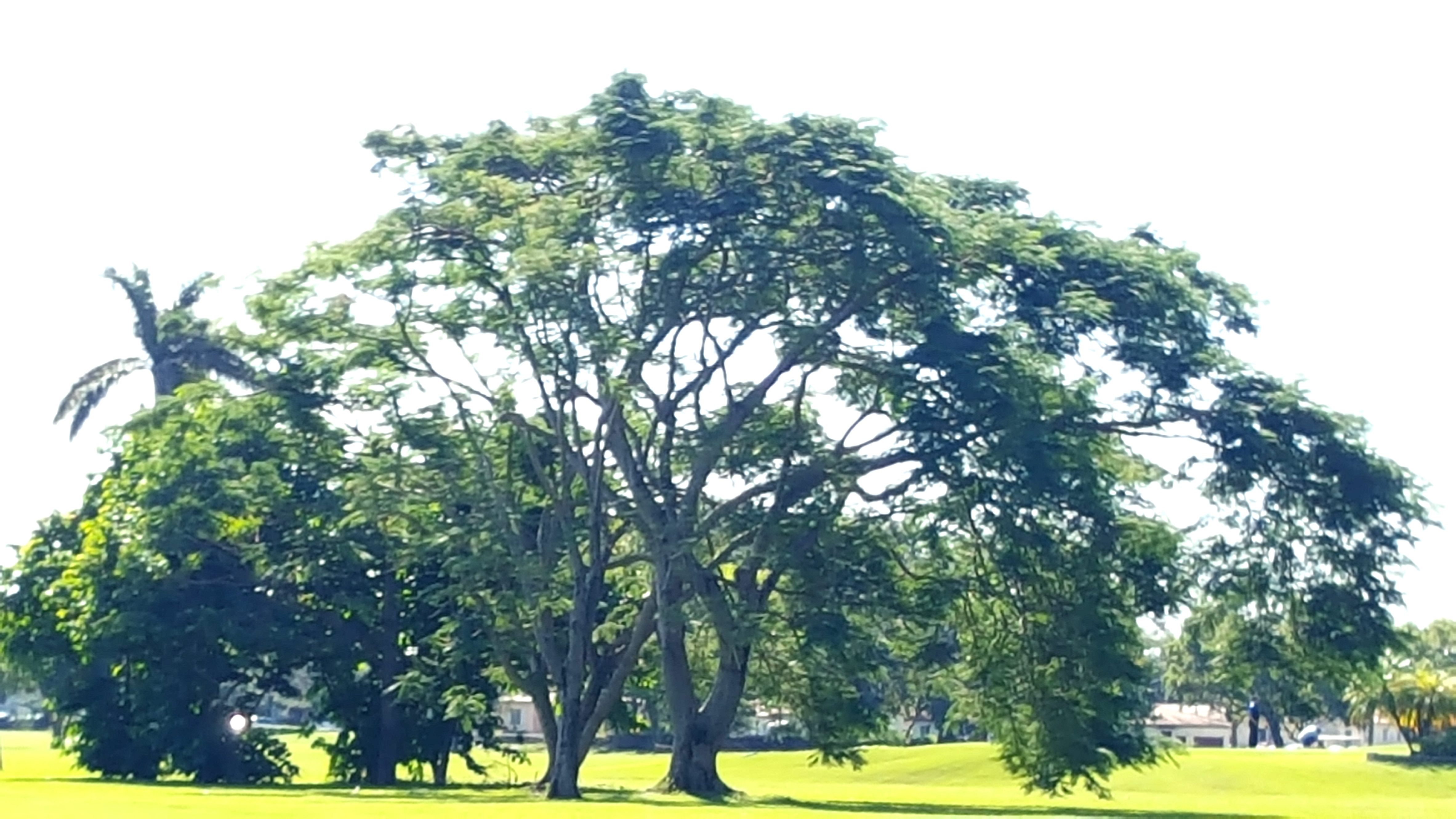
Miami Springs will always have a prominent place in history books — and not just for golf. MIAMI SPRINGS, Florida – The first thing you notice are the trees. The Miami Springs Golf & Country Club has lots of great big ones, and there’s a reason.
Trees played a big part in the design of this, arguably the most historic 18 holes in Florida – a state with over 1,300 courses, more than any other in the nation.
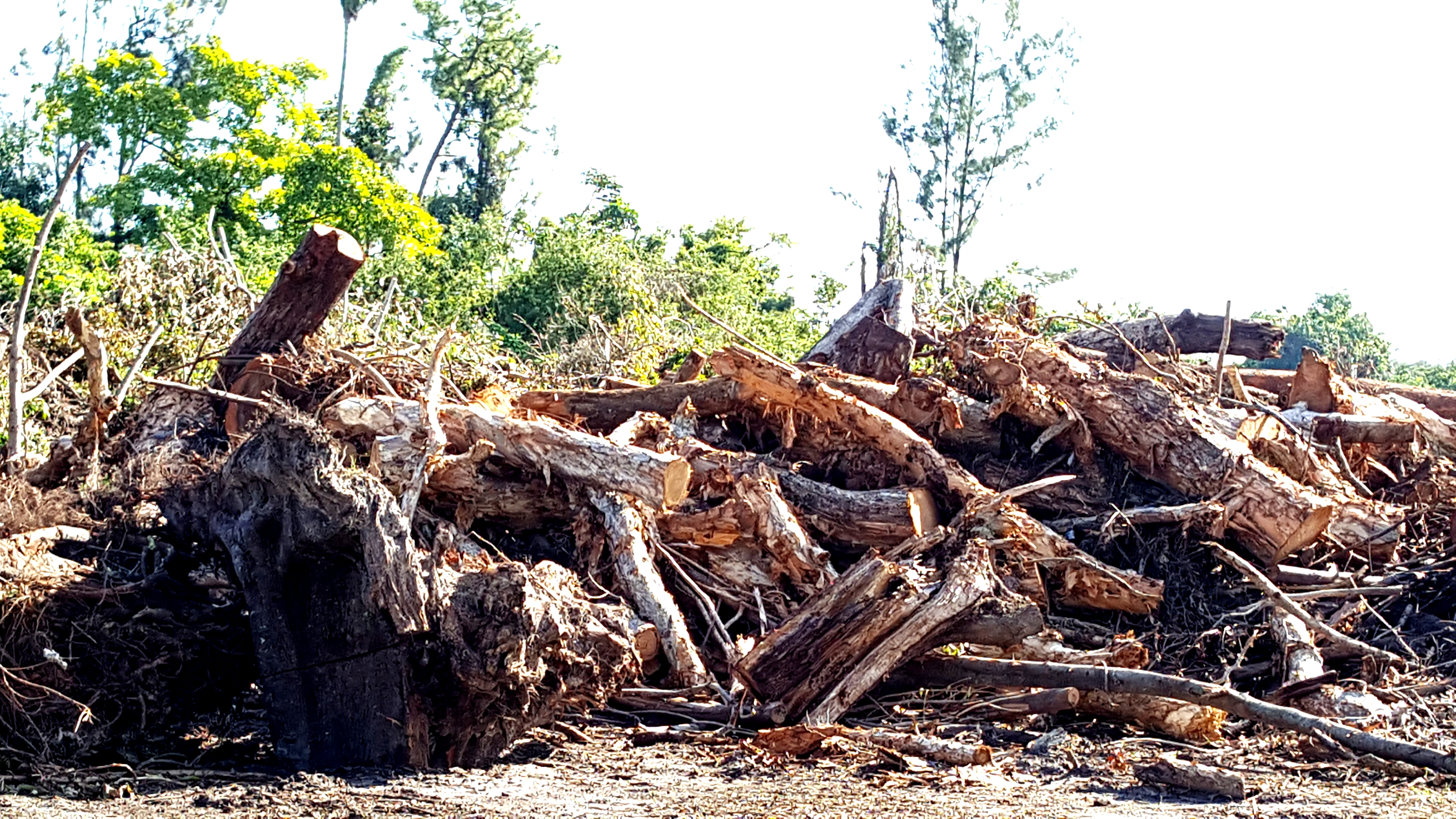
Unlike many of the old courses, both in Florida and elsewhere, many of the original trees were allowed to grow at Miami Springs. Over 70 were lost during Hurricane Irma in September, but not the controversial one blocking the green at the par-3 twelfth hole. Many of the course’s regular players were hoping that tree would have blown down, but it’s still standing.
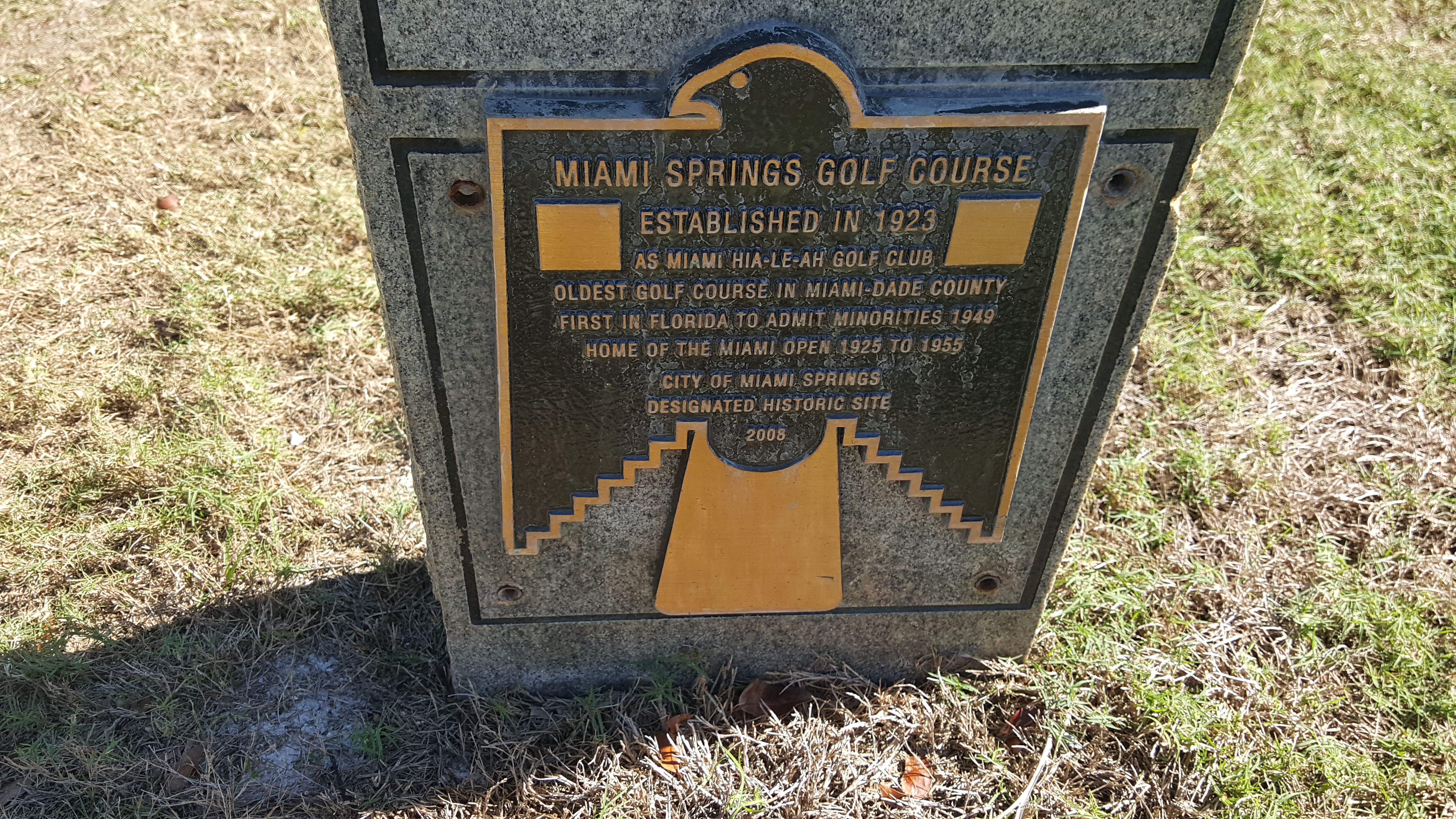
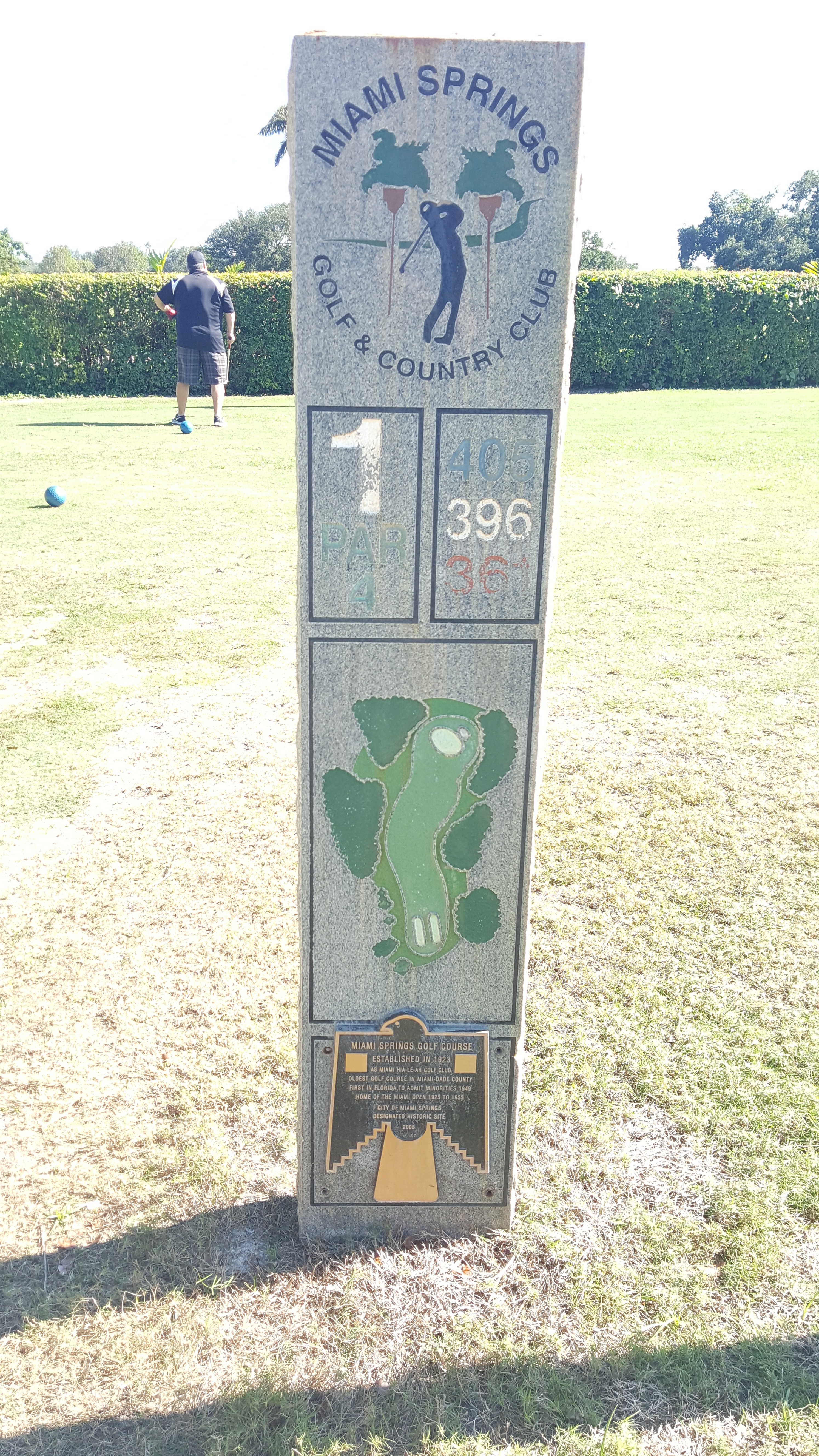
Miami Springs is located beside the Miami International Airport and is just two miles from the famed Trump National Doral Miami resort and spa. Much to the credit of its operators, Miami Springs’ layout wasn’t seriously altered over the years. It still plays at 6,755 yards from the back tees, just like it did during its 30 years as the home of the Miami Open and the 34 years it hosted the North & South tourney – the largest minority-sponsored golf competition in the United States. Miami Springs was the first Florida course to admit minorities, in 1949.
Those were just the biggest of many big events held at Miami Springs. If only those trees could talk, they would have some interesting stories to tell. As it is, the operators of the course have thankfully embraced the course’s rich history. Its well documented on the course’s website. Massive tree like these are the trademark at Miami Springs. Many are over 90 years old.
The present ownership, the City of Miami Springs, has a friendly staff and that adds to the good vibes you get when you visit the place. It starts with the waitress in the small but neat dining room and the starter at the first tee, who is quick to extol the course’s charm, and it extends all the way to the guy greeting us in the parking lot after our round. He wanted to sell us clubs and was reluctant to take no for an answer, but he eventually did with a smile on his face.
We were paired with a caddie from Doral and a young local who was well versed on the public courses in the area. Miami Springs is one of their favorites. It’s not just the course, either. Miami Springs also has the only lighted grass driving range within 25 miles.
From a historical perspective, Miami Springs isn’t the first course in the area. There was a six-hole layout at the Royal Palm Hotel in 1897 and Henry Flagler opened nine holes at the Miami Country Club in 1898. Miami Springs developed from the enthusiasm of a group called the Miami Coconuts, a group of businessmen who loved golf but had no place to play. This massive banyan is the most memorable of the trees adorning Miami Springs.
Tubby Smith, the leader of the Coconuts, was editor of The Southern Golfer. Some historical accounts claim that he designed the course in 1922. The more widely held belief is that a respected Chicago architectural firm, William Langford and Theodore Moreland, did the work. At any rate, the course — built for $101,000 – opened as Dade County’s first municipal course in 1923 under the name of Miami Hialeah Golf Club.
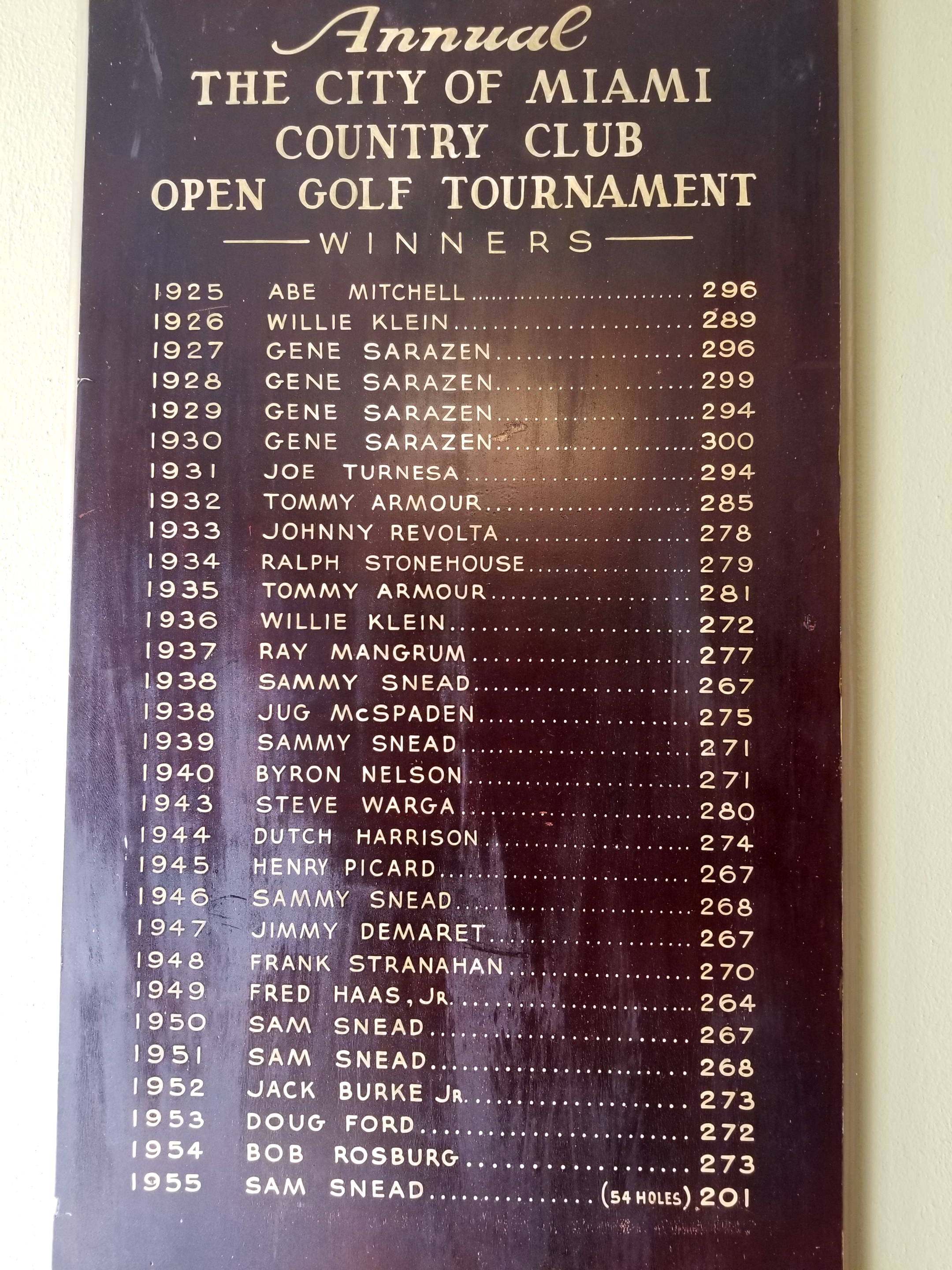
It was originally owned by the City of Miami, which kicked in $3,000 for prize money to create the first Miami Open in January, 1925. The event drew all the great players of the era. Cyril Walker, the reigning U.S. Open champion, was there along with Walter Hagen, Long Jim Barnes, Jock Hutchison, Tommy Armour and Gene Sarazen. The reigning British Open titlist, Abe Mitchell, led wire-to-wire in winning the $600 first prize, however.
For the next 29 years the Miami Open was a sports highlight in south Florida. Sam Snead won it six times, including the last staging in 1955 when rain shortened the event from 72 to 54 holes. On the champions wall in the clubhouse he’s even listed as “Sammy Snead’’ in the early references. There are plenty of famous names among the Miami Open champions
The Miami Open became an official PGA event in 1945 and was held in January as the traditional kickoff to the circuit’s winter season. In 1955 it was shifted to December dates with a $12,500 prize fund and still drew 25,000 spectators.
That, though, turned out the end of a great run. The PGA required a $15,000 purse the next year, and the City of Miami refused to pay it. Not only that, but the governmental body deemed the Miami Springs clubhouse an unsafe structure and burned it down in a fire drill.
Looking back at the Miami Open years, the tourney became a milestone when Arnold Palmer made it his first professional event in 1955, a year after winning the U.S. Amateur. He shot 78-74 and missed the cut by six strokes but Palmer returned to tie for eighth in the tourney’s last staging a year later.
While the Miami Open was the main event, Miami Springs also hosted a second PGA event during those years. The Miami Four Ball was part of Byron Nelson’s record 11 straight victories during the 1945 season. Modern tee markers contrast with Miami Springs’ rich past.
With the PGA gone Miami Springs hosted the Major League Baseball Players outing from 1956-67 along with the North and South event. Those events brought such luminaries as Mickey Mantle, Yogi Berra, Jackie Robinson, Althea Gibson, Nat `King’ Cole, Sugar Ray Robinson and Joe Louis to Miami Springs.
Seven years after the last Miami Open the PGA Tour established another longstanding tournament in Miami. Doral, with its Blue Monster course, hosted tournaments for 55 straight years until sponsorship problems led to the circuit putting a tournament in Mexico in its place on the 2017 schedule.
So now Miami is without a PGA Tour event? That doesn’t sound right. Doral, with its four 18-holers, will likely host big tournaments again. Miami Springs, most likely not.
Still, it was at Miami Springs where Florida’s rich golf history really got its start. That’s why it deserves such a prominent place among the 53 courses listed on the Florida Historic Golf Trail.
Two months later remnants of Hurricane Irma were still present at Miami Springs.
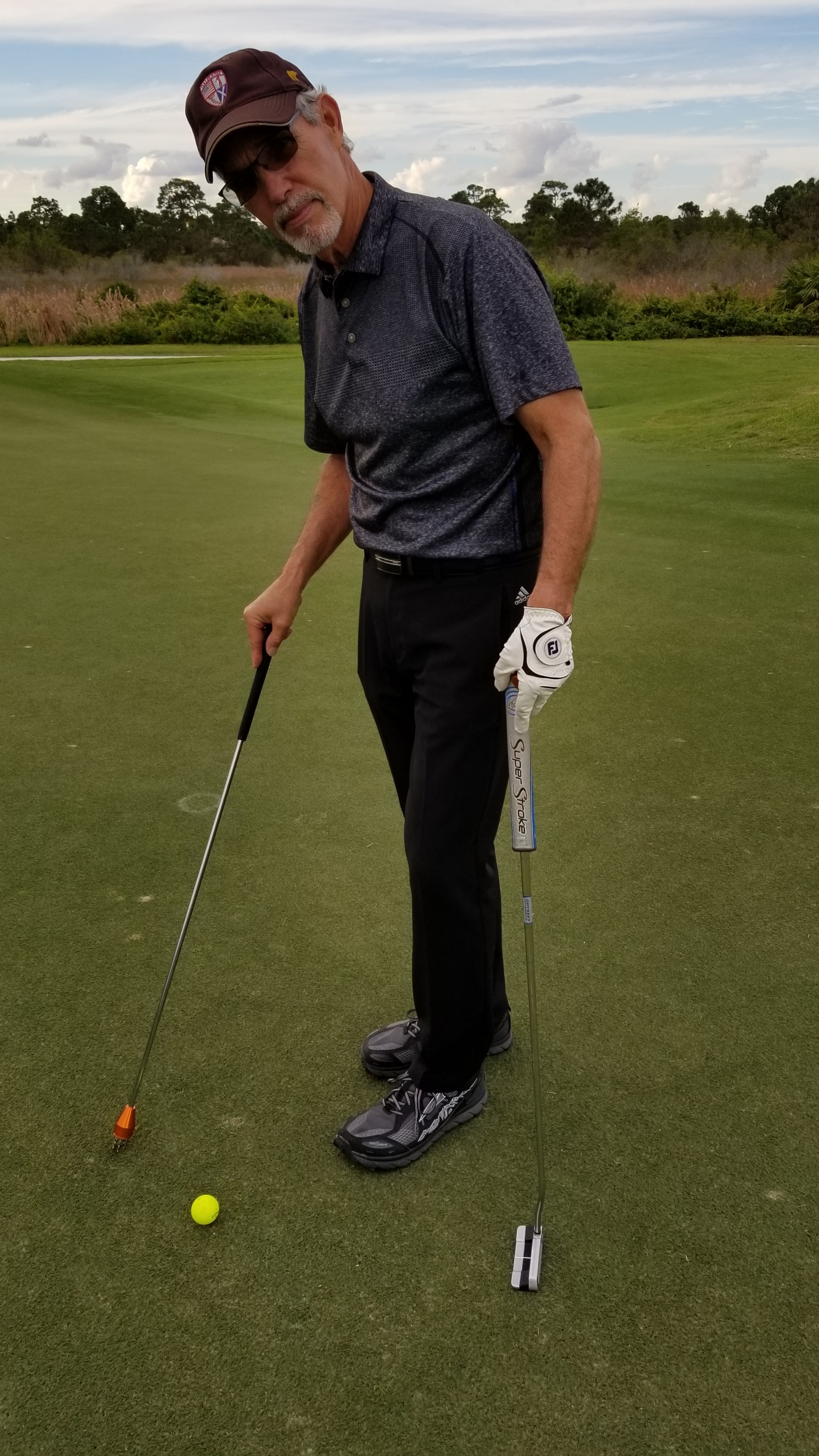
Rick Hetzel’s premier divot tool fits right with his clubs.When it comes to analyzing the latest in golf equipment I tend to defer to Jason Bruno, my Florida golf website partner who is a scratch player. I’m clearly not.
Bruno, the creator of the LinksNation website, and I had a catch-up round this week – our first since I returned from the Chicago area in September. We played at PGA Golf Club’s Dye Course along with Rick Hetzel, the president of InstaGolf LLC.
The company, based in Hetzel’s hometown of Cape Girardeau, Mo., specializes in golf accessories. Its products, sold predominantly on line, include shoes, putters, towels and rain gear. His offerings are certainly fair game for me to analyze as well. You don’t have to be a scratch player to analyze them.
I quickly became interested in all of Hetzel’s products, but divot tools in particular. There are so many of these — from so many manufacturers — on the market. Hetzel himself has four different models. The one that intrigued me the most was his SPIDERPro. If you have a bad back, this one is for you.
You don’t need to bend down to repair a divot if you have a SPIDERPro. It fits into your golf bag like an extra club. If one of your shots does damage to a putting surface you pull out the SPIDERPro, unscrew the top, poke the stainless steel legs on the exposed end into the divot and watch it disappear. Hetzel’s divot tools come in more standard looks as well, and he reports that all have been well-received by golf course operators.
ORLANDO, Florida – It’s not unusual for a golf destination to lose its owner or – in Florida, at least – to be hit by a hurricane. That’s just part of life.
When the owner, though, is the legendary Arnold Palmer and the hurricane is one of the most devastating in the history of the state, that changes things. Palmer’s Bay Hill Club and Lodge has coped with both challenging developments and – we found out first hand – is now dealing with another.
We visited Bay Hill to see how the club has adapted to life without Palmer, whose consistent on-site presence made the club like no other, and the aftermath of Hurricane Irma, which battered all of Florida and neighboring states in September.
All was well after the first night of our visit. The next day, though, we woke up to the sound of fire alarms. A water main burst caused damage to several rooms in the 70-room Bay Hill Lodge, a dilemma with the tourist season fast approaching but nothing that will have a long-lasting impact.
Palmer died on Sept. 25, 2016, while awaiting heart surgery near his long-time home in Latrobe, Pa. He was 87, and his passing triggered tributes worldwide. The man known by all as “the King’’ or simply “Arnie’’ did a lot more good things besides just winning golf tournaments. He was one of the most beloved sports figures of all time, and six months after his passing a statue in Palmer’s honor was erected at Bay Hill. It was completed in time for the annual Arnold Palmer Invitational – an annual stop on the PGA Tour.
Now, eight months and a hurricane after that tournament, we found Bay Hill still a vibrant place. Palmer is gone, but certainly hasn’t been forgotten. The memories of his good old days in tournament golf were always reflected in the décor at the lodge and more classic photos and memorabilia have been added in the past few months. Given its history, this recent addition to Bay Hill may be the club’s most interesting piece of artwork.
The most interesting is a piece of artwork in the member’s lounge. (It’s important to note that everyone lodging at Bay Hill is a “member’’ during their stay and is treated as such).
Two Bay Hill members, John and Shirley Horn, commissioned the artwork, which was created by artist Bill Mack. You have to know the history of the piece to fully appreciate it; a casual glance won’t do.
Mack purchased the iconic metal sign that was built in 1923 to welcome visitors to Hollywood. It was located at Mount Lee in Los Angeles before Mack acquired it in 2007. He used the metal from it as a façade to paint portraits of illustrious movie stars, but included Palmer among his subjects. In Mack’s judgment, the 80-year old metal material “gives each painting a heartbeat, a sense of time and place.’’
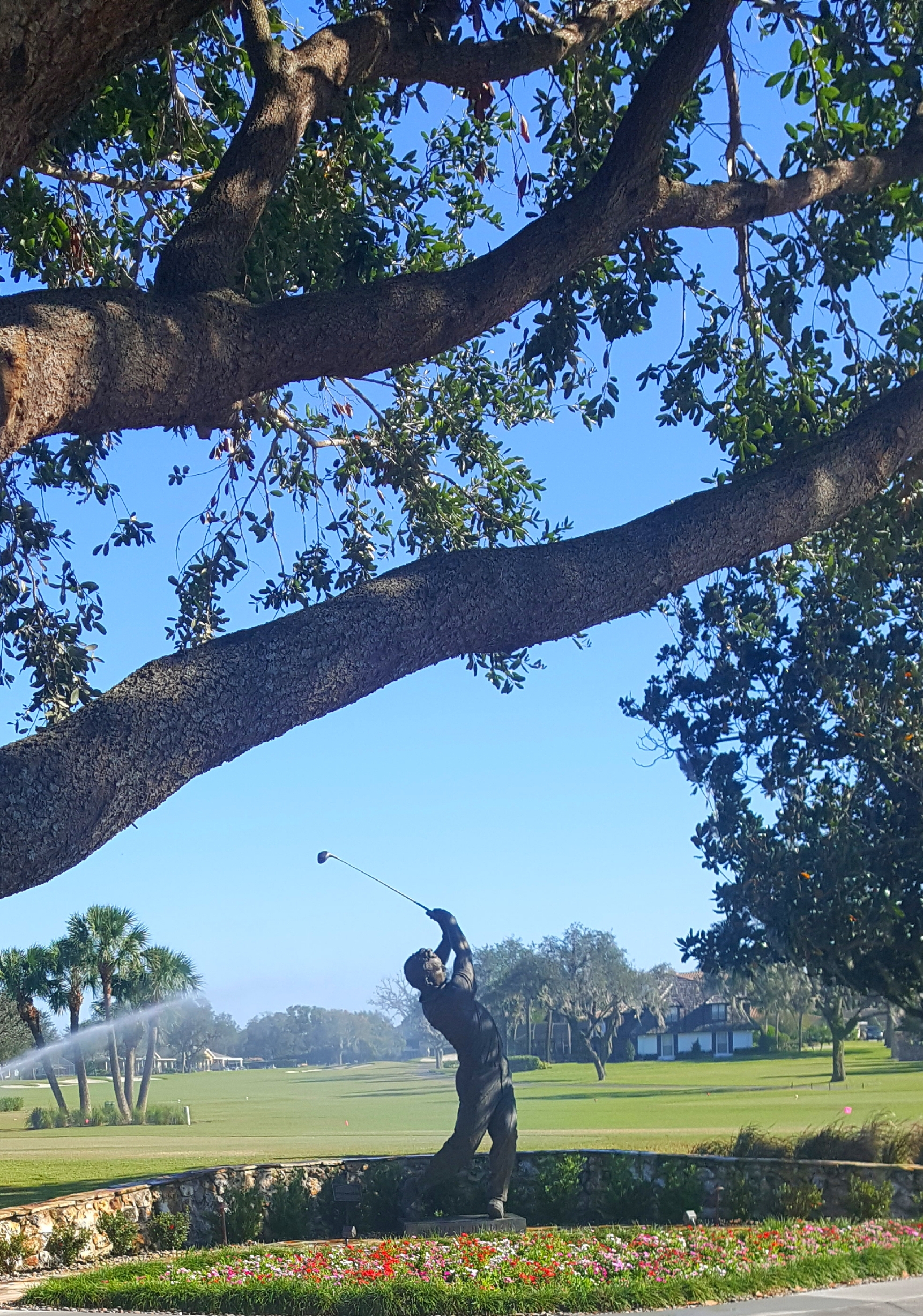
The Bay Hill Lodge is the perfect place to showcase this unique artwork of Palmer. He’s been the subject of many other forms of art over the years, including the statue that has been a feature at Bay Hill since last year’s Arnold Palmer Invitational. The Arnold Palmer statue has found a permanent home among the flowers of Bay Hill.
That statue was moved after the PGA Tour event and is now located behind, instead of in front of, a flower garden. Its present location is better than its former one, though there were some fears that the statue was vulnerable when Hurricane Irma visited. Those walloping winds couldn’t take down “Arnie,’’ however, and Bay Hill – unlike many courses in the area — escaped pretty much unscathed as well. The course was closed only five days for cleanup.
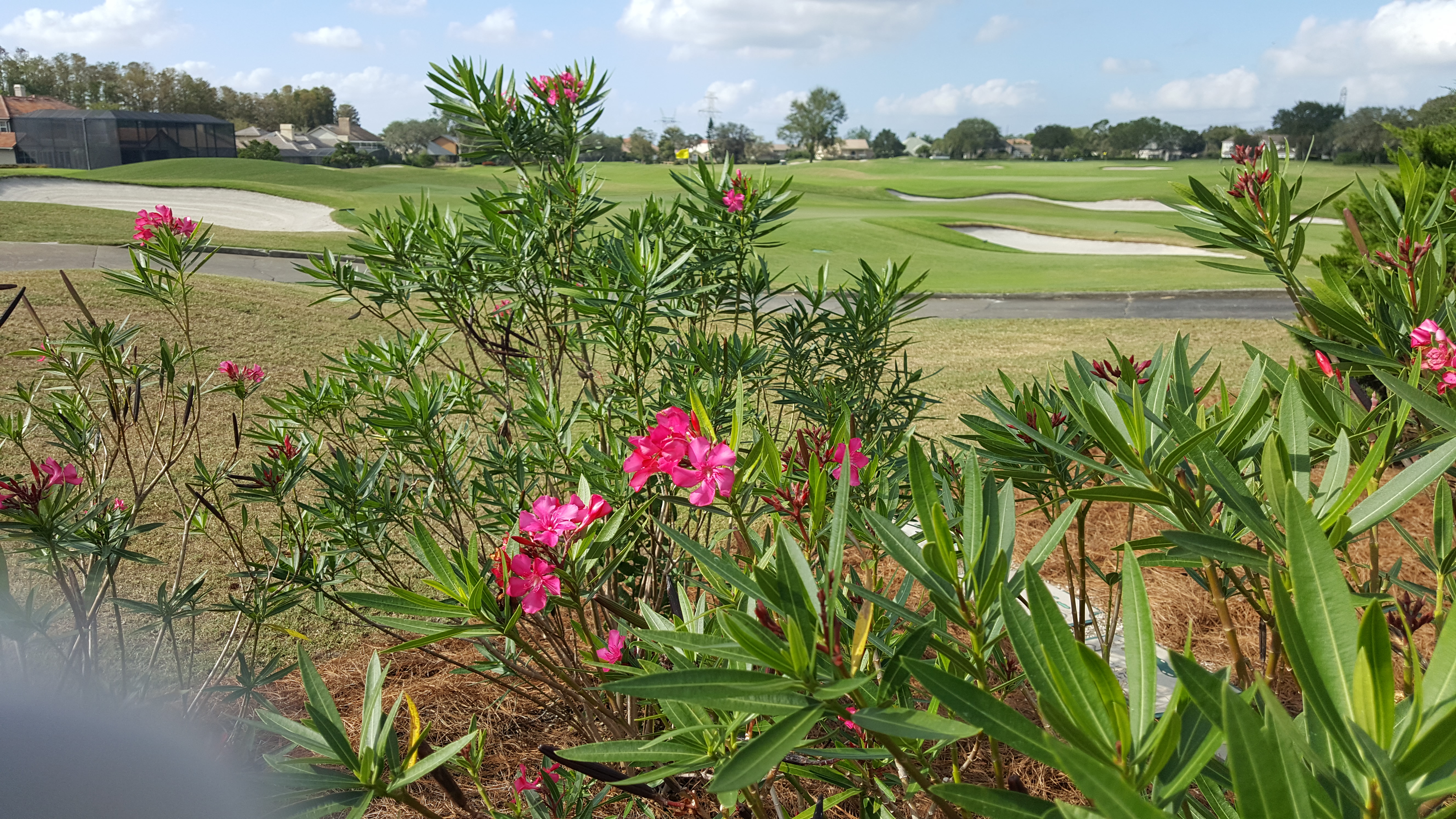
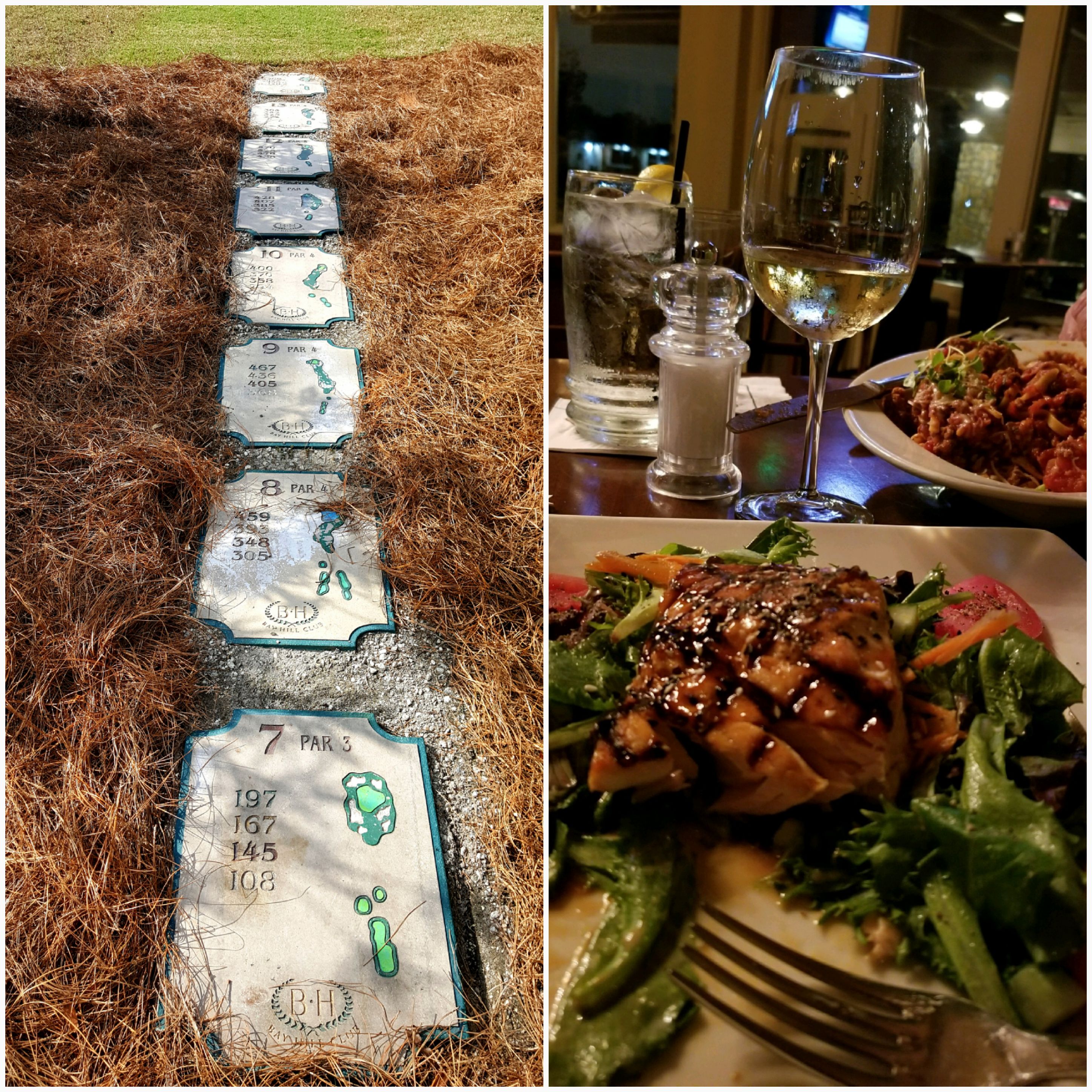
Otherwise, the most notable change at Bay Hill isn’t all that notable. There’s just some new signage on the club’s 27 holes, but the Champion, Challenger and Charger nines were as pristine as ever – even a few days after over-seeding and other maintenance procedures were performed.
Palmer’s love affair with Bay Hill started that day in 1965 when he won a charity exhibition event there that also included Jack Nicklaus and Don Cherry. Palmer immediately told his wife Winnie that he wanted to own the place. In 1970 he took out a five-year lease and became the owner officially in 1975. The Charger nine isn’t used in the Arnold Palmer Invitational but it has more picturesque holes.
Groundbreaking for Bay Hill actually came in 1960 and architect Dick Wilson designed the original 18 holes, which opened a year later. Palmer’s influence, of course, took the place to new heights. In addition to the golf it now includes three restaurants, three lounges, six tennis courts, a full-service spa, an Olympic-size swimming pool, a marina and seven guest cottages.
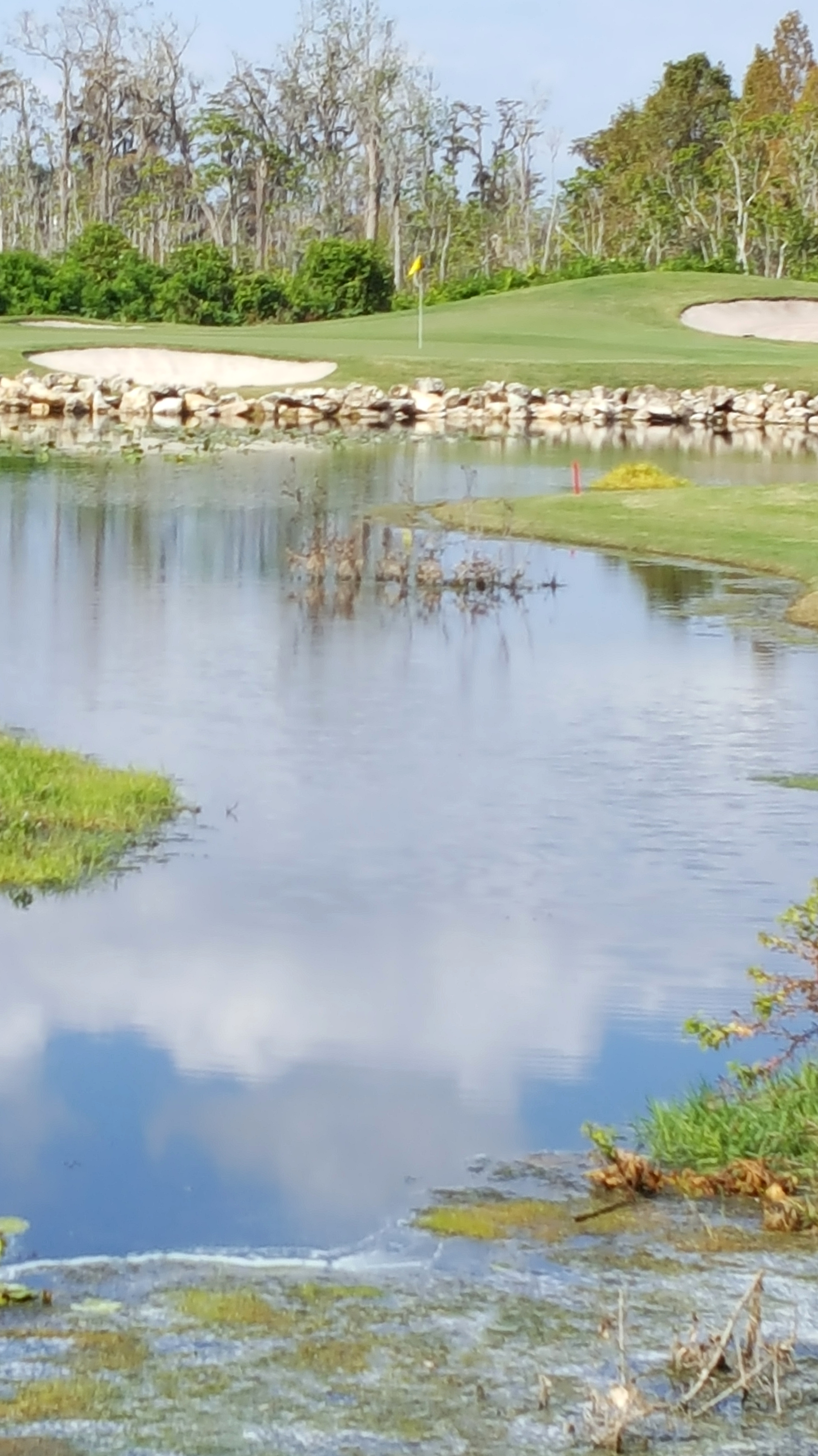
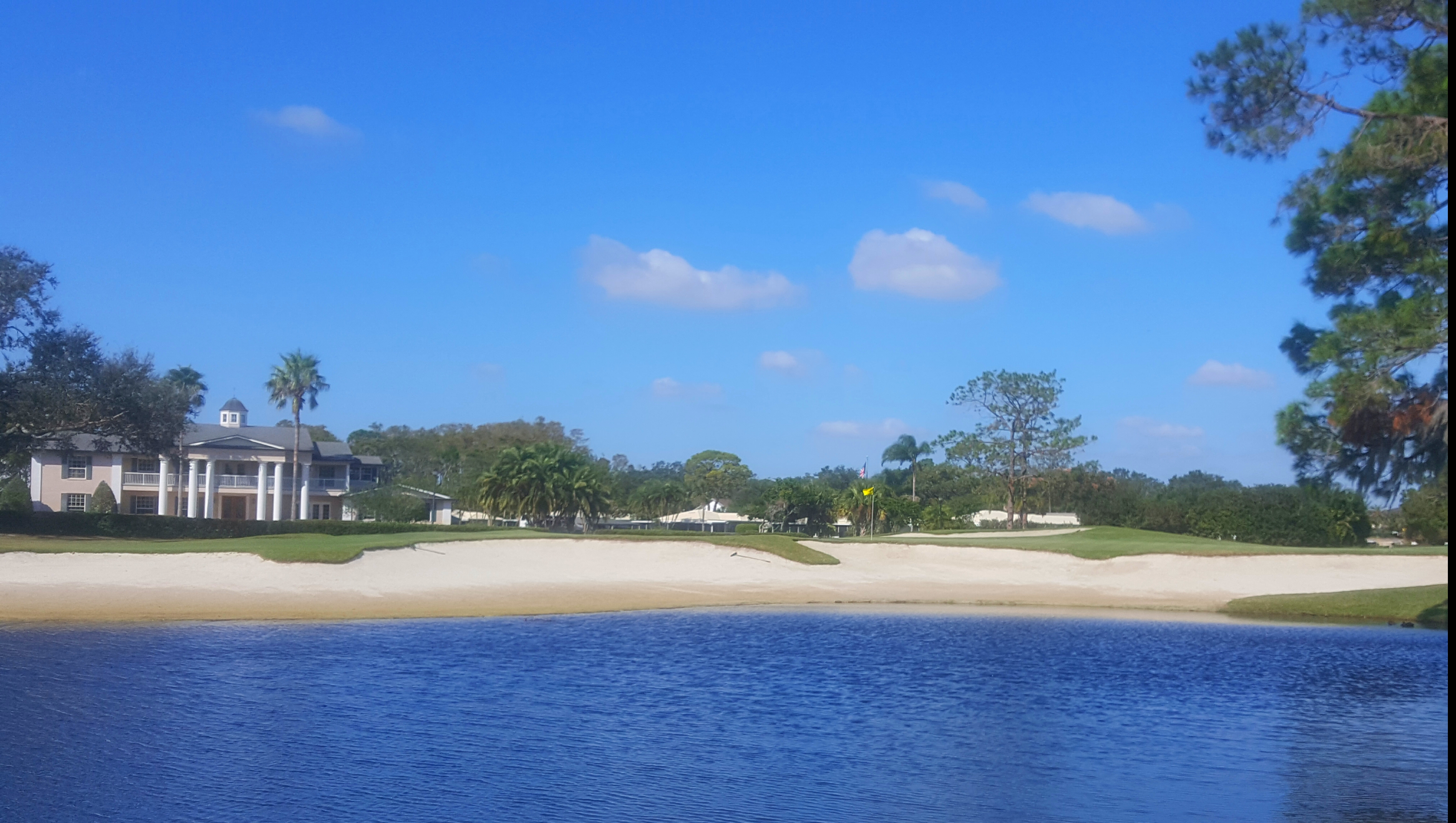
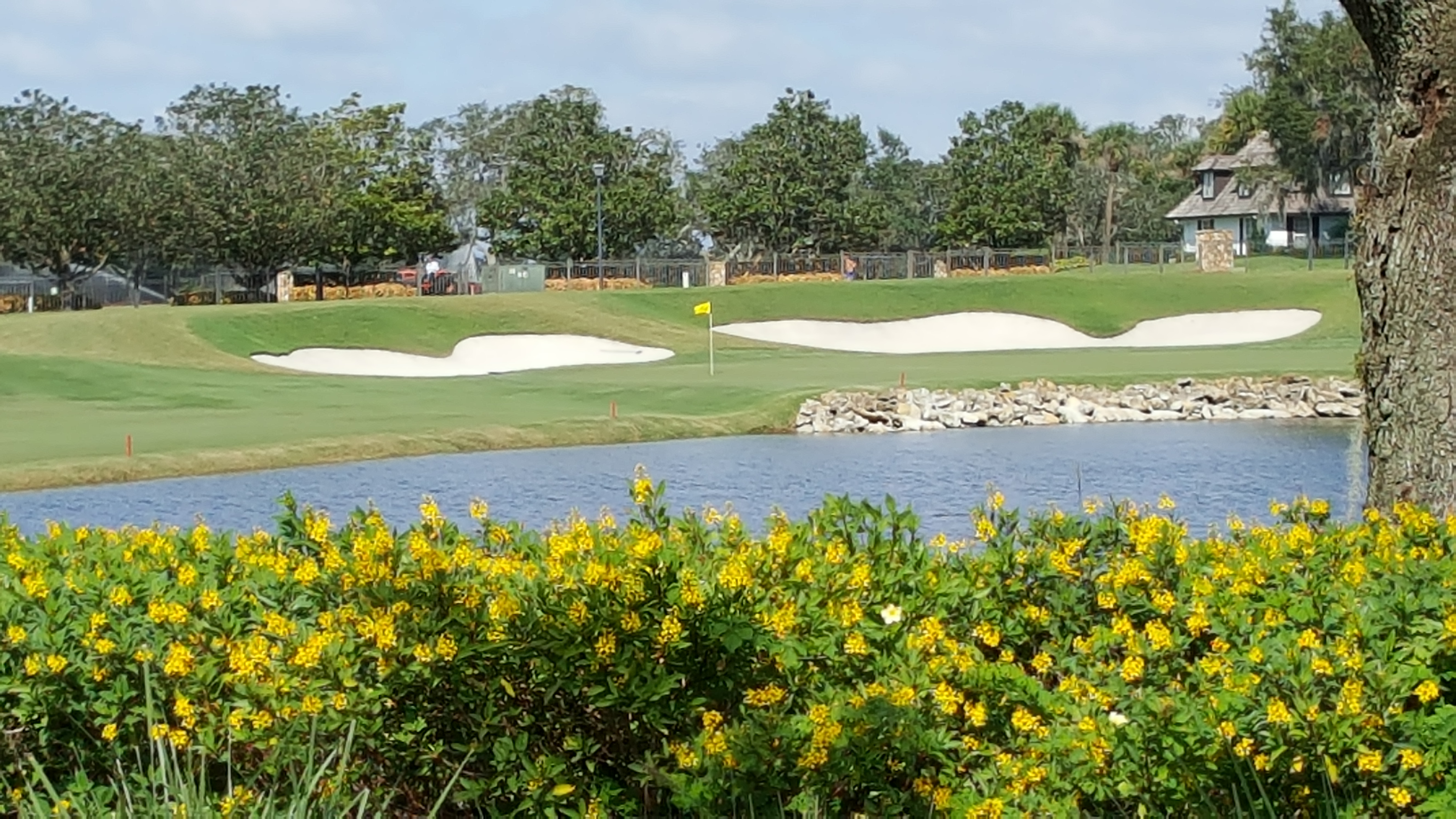
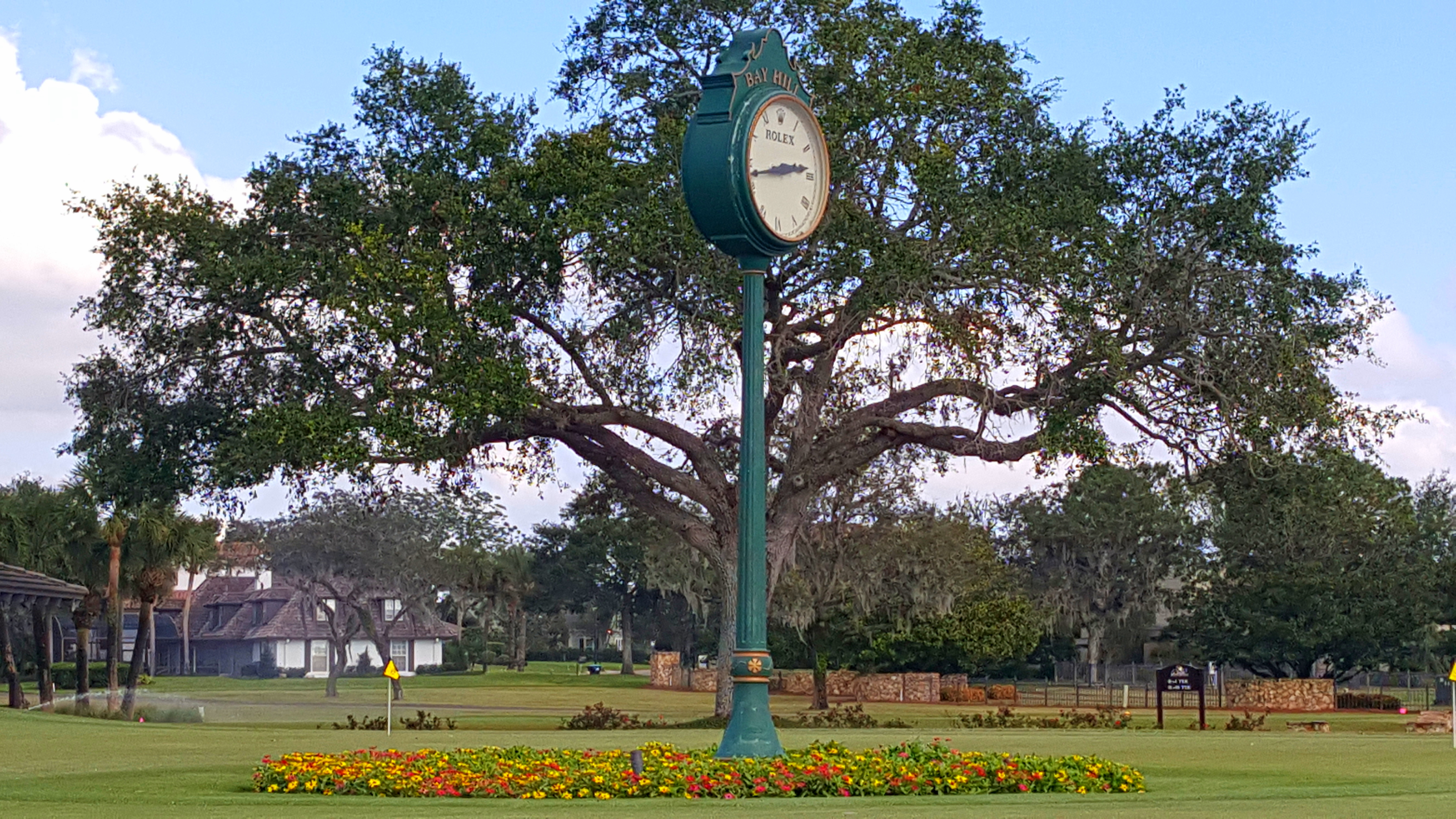
Palmer’s presence, as much as the facilities, made Bay Hill the special place it has become. In our first visit, in 2014, he dined and socialized with his visitors. No other golf destination could provide that. It’s not the same with him gone, of course, but the aura continues with his daughter, Amy Palmer Saunders, and her husband Roy overseeing the operation. The spirit of Arnie lives on, as you can see from the scenes below, taken on and off the course.

 BOCA RATON, Florida – PGA Tour Champions had a popular kickoff to its season with the Allianz Championship on the North Course at Broken Sound Golf Club. That sponsorship ended after the 12th playing of the event last year, but – other than a name change to the Boca Raton Championship – the event will go on with no loss in momentum.