Chicago golf scene will be different now that four amateur stars have turned pro

In the early 1980s the Chicago amateur ranks were dominated by a fabulous foursome, David Ogrin, Gary Pinns, Gary Hallberg and Jerry Vidovic. Toss in Lance Ten Broeck and Roy Biancalana, who were slightly younger than that group, and you had what I consider the Golden Years of Chicago amateur golf.

Ogrin, Hallberg and Ten Broeck were winners on the PGA Tour. Pinns and Biancalana played on that circuit and Vidovic won a national title – the U.S. Amateur Public Links. It’ll be tough to top that group.

The last few years, however, produced a Fabulous Foursome, too, in Doug Ghim, Nick Hardy, Patrick Flavin and Tee-K Kelly. You could also mix in the slightly older Vince India and Brad Hopfinger, too. Those two are among the select nine players with wins in both the Illinois State Amateur and Illinois Open and are now past the rookie stage on the Web.com Tour.

Ghim, Hardy, Flavin and Kelly all had their moments as amateurs and are new to the pro game. It’ll be interesting to see how their careers play out, but – suffice it to say for now – they’ll be missed around the local tournament scene this season.

Who was the best as an amateur? That’s hard to say. Ghim ventured to the University of Texas and basically limited his Chicago play to the Western Amateur. Kelly won the Illinois State Amateur twice and was runner-up another time.

Hardy had the best single tournament performance with his record 28-under-par over 54 holes to capture the 2016 Illinois State Amateur and he was always a factor in the Western Amateur and Illinois Open. Flavin had the best single season when – in 2017 — he became the first player in 37 years to win both the Illinois State Amateur and Illinois Open in the same year.

So, what happens now?

Ghim moved to Las Vegas and finished a solid third in the final stage of Web.com Tour qualifying. India, the reigning Illinois Open champion, regained his Web.com Tour card with a 12th place finish in his return to Q-School. They’ll be easy to follow, since they have a tour with almost weekly tournaments to play in. Both made the cut in the first one of 2019, in the Bahamas.

Kelly already won on the PGA’s Latinoamerica circuit – a whopping seven-shot victory in 2017 — and will be able to compete there again. His challenge will be to elevate his game to another level, and another tour.

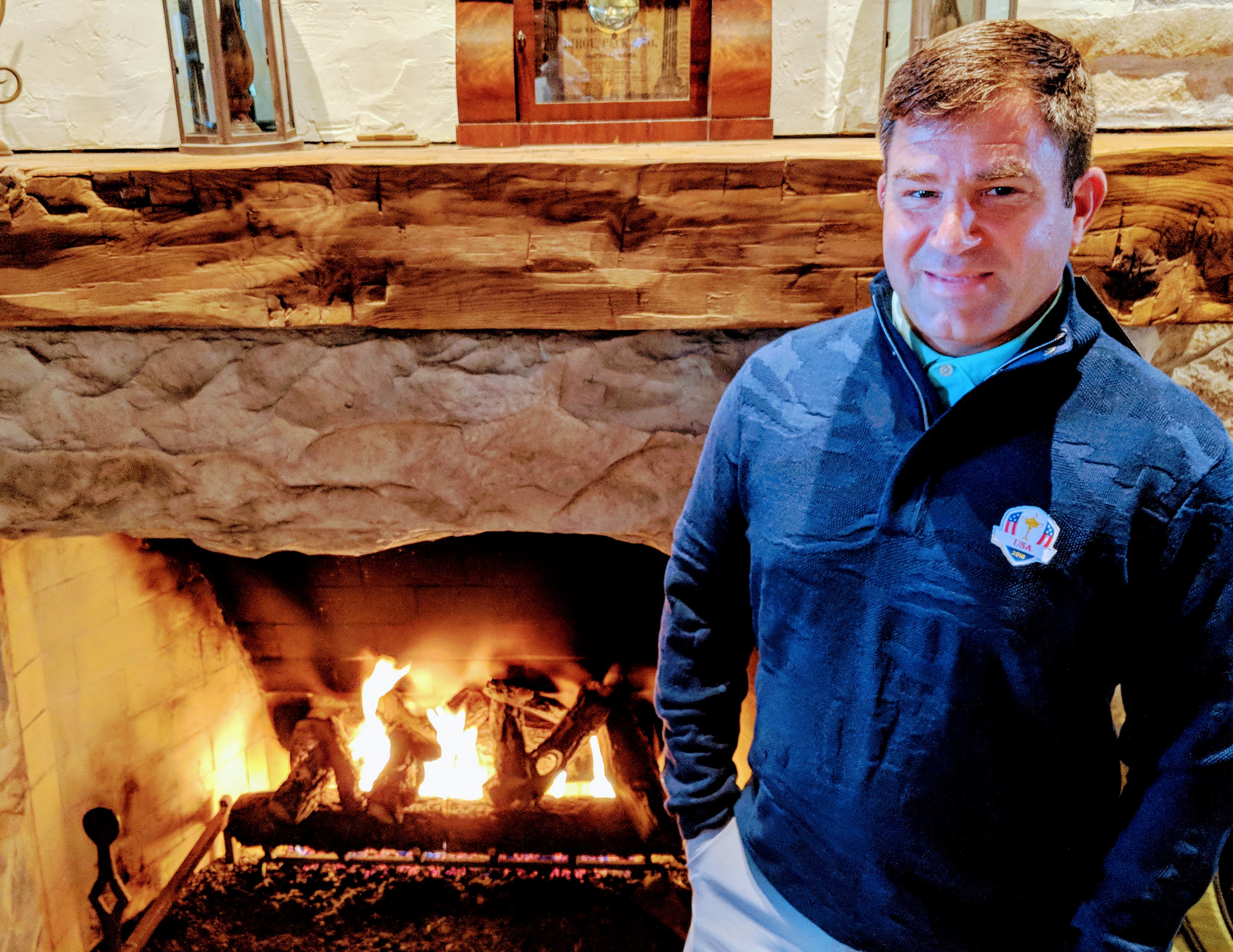
For good friends Hardy and Flavin, it’s a little different. They established residences in Scottsdale, Ariz., during winter that are 10 minutes apart. In April, or whenever the Chicago weather permits it, they’ll return to the area and practice at the Merit Club in Libertyville. Finding tournaments might be a challenge, as neither has status on any tour yet.

Flavin survived only the pre-qualifying stage of Web.com Tour qualifying. He had better luck after moving to Scottsdale in November, finishing seventh and second in two mini-tour events with a missed cut in an event in Mexico in between.

“My game feels good, and I love being out here,’’ said Flavin, who is living with a college teammate from Miami of Ohio until his return to Chicago.

Flavin didn’t get the big tournament exposure that Hardy did as a member of the University of Illinois’ powerhouse teams, so he’s taking a different approach to his first season as a pro.

“I’ll go into the Latinoamerica Q-School, then the Canadian Tour Q-School,’’ he said. “That’ll give me the most kicks of the can, and if I finish well on the money lists I can move up to the Web.com. Playing a schedule like that really suits my game.“

The Latinoamerica Q-School will be a special experience. The competition will be held in Brazil, on the same course that hosted the last Olympics golf tournament.

Hardy, who made the cut in two U.S. Opens as an amateur and earned paychecks on both the PGA and Web.com circuits last year after getting into events on sponsor’s exemptions, did enter the Monday qualifier for the Waste Management Phoenix Open on the PGA Tour. Other than that he wasn’t sure where he’d be playing immediately after returning to the U.S. following a winter visit to Australia.

“My schedule is tough to plan,’’ he said. “I have to earn my way into tournaments. I’ll play in a lot of Monday qualifiers and try to earn my status that way.’’

Hardy made it through the first stage of Web.com Tour qualifying but came up two strokes short in the second stage. Players who reach the third and final stage have at least limited status on the circuit.

“Q-School was a great learning experience, though I didn’t play my best,’’ said Hardy, “Now I’ll take what I learned as an amateur and at Illinois. I feel great about my game.’’

On the women’s front Chicago will have a changing of the guard on the Ladies PGA Tour. For nearly three decades the only Chicago player on the premier women’s circuit was Nicole Jeray. With Jeray, 48, taking a teaching job at Mistwood in Romeoville, the lone Chicago representative on the LPGA circuit will be Winnetka’s Elizabeth Szokol, and she has the credentials to do quite well.

Szokol, who will be an LPGA rookie in 2019, earned her place on the circuit by finishing fourth on the Symetra Tour money list in 2018. Her second season on the LPGA’s developmental tour was a solid one after she was sidelined for eight weeks by knee surgery in January.

She won the IOA Invitational in May – her second start of the season – and tied for third in the season-ending Symetra Tour Championship. In between Szokol had four more top-10 finishes en route to earning $76,612 in her 20 tournament appearances. She’s expected to make her LPGA debut overseas in February. The LPGA has four tournaments – in Australia, Thailand and Singapore – before holding its first event in the U.S. at Phoenix in March.

Jeray, meanwhile, isn’t done competing. She earned a place in one of the LPGA majors — the KPMG Women’s PGA Championship — with a strong showing in last year’s LPGA Teaching & Club Professionals National Championship and is especially focused on winning the Illinois Women’s Open for the third time on the course where she now works.

Already the IWO champion in 1998 and 2003, she hopes to become the first player to win the tournament in three decades.


GolfVisions’ promotions are a big reason for the Chicago Golf Show’s success

Back in 2010 Tim Miles Sr. made a bold promotional move. He offered a free round to all Chicago Golf Show visitors at all of the courses that his company, Mundelein-based GolfVisions, was managing.

Looking back, Tom Corcoran – owner of the 35-year old show since 1997 — still calls Miles’ move “the wildly greatest promotion we’ve had.’’ That’s saying a lot, because Chicago has the oldest consumer golf show in the nation.

Miles, GolfVisions president and chief executive officer, liked the results, too. He has continued the program every year since then. The free golf enticement has been a popular feature with the show’s 15,000 to 20,000 annual visitors.

Those attending this year’s 36th annual show, running Feb. 22-24 at the Stephens Convention Center in Rosemont, will be offered a free greens fee at one of 15 courses under GolfVisions’ care, and that free round will cover the cost of a ticket to the show. With Miles getting more players to his courses, it’s a win-win situation for all concerned and this year the offering is even more special.

GolfVisions took over the management of Lake Bluff Golf Club on Jan. 1. That was a major step in a series of developments that very likely saved one of the best public facilities in the Chicago area from being shut down.

The course, owned by the Lake Bluff Park District, was having financial problems and Park District officials admitted that some basic improvements were long overdue. The threat of closing after the 2018 season was a real one. The Park District wanted $260,000 raised in the final half of 2018 and/or committed in 2019 to approve its opening for this year.

That triggered the creation of the Lake Bluff Community Golf Association, a group of about 50 concerned citizens who wanted to keep the course going.

Six members united to hold a golf marathon that raised $27,000. Then the group organized a 50th anniversary celebration for the course last August that drew 144 players and 250 dinner guests. It boosted the money raised to basically the year-end total — $126,000.

“We raised a big chunk of the money on that one night,’’ said Mike Galeski, one of the association leaders who has held prominent leadership roles in the staging of both a PGA Tour Champions event at North Shore Country Club, in Glencoe and the LPGA’s UL International Crown at Merit Club, in Libertyville.

The amount raised in 2018 was a start, and the course will open this year.

“It demonstrated community support,’’ said Galeski. “The Park District figured there must be enough interest to keep it.’’

The influx of new money led almost immediately to the start of work on the clubhouse.

“That building had not been touched in decades,’’ said Galeski, “and it is highly visible to people.’’

Billy Casper Golf had been managing the course. Its contract expired on Nov. 30. Shortly thereafter GolfVisions got involved. Eventually Miles and the Park District negotiated a five-year lease agreement that additionally has two five-year options. Lake Bluff has been saved – at least for the immediate future – and Chicago Golf Show visitors might be able to get a free round on the course. Those who do will see what a gem this layout is. They’ll want to return. At least that’s my prediction, and Miles is hopeful.

“It’s certainly an interesting deal, but it’s not a slam dunk,’’ said Miles. “It’ll be challenging, but a lot of fun.’’

Regardless of what the future holds, the re-opening of Lake Bluff is a feel-good story and anything of that nature is a big boost for golfers going into 2019. GolfVisions was founded in 2001, and Miles’ perspective on 2018 presents a most sobering reflection of the sport both here and beyond.

“It was a horrible year,’’ he said. “We had the worst year I’ve ever seen in Chicago in 2018, and it wasn’t just Chicago. It was also from an industry standpoint. Play was anywhere from 10 to 18 percent down. We had a record year for the number of playable days. There were 35 fewer playable days than in 2017. Everybody wanted to see that year gone — and it’s gone.’’

That’s a good thing. With the end of 2018 has come the beginning of 2019, and there’s plenty of optimism for the months ahead.

“We’ll continue the fund-raising issue for future improvements,’’ promised Galeski. “Our players have demonstrated that they want to keep participating in events.’’

Lake Bluff is a par-72 track that plays at 6,589 yards from the tips with a slope of 124 and rating of 71.3. A parkland-style layout, it features mature trees with water coming into play on several holes.

“It’s a nice course – easy to walk and easy to ride,’’ said Miles. “It’s a course people should be wanting to play.’’

GolfVision operates other courses in that category, some of which – Bittersweet in Gurnee, Bonnie Brook in Waukegan and Midlane in Wadsorth – are in close proximity to Lake Bluff.

Other public 18-holers in the GolfVisions portfolio are Broken Arrow, in Lockport; Chapel Hill, in Johnsburg; Foxford Hills, in Cary; Oak Grove, in Harvard; Settler’s Hill, in Batavia; Tanna Farms, in Geneva; and Village Green, in Mundelein.

GolfVisions also operates three nine-holers in Illinois – Deer Valley in Big Rock, Greenshire in Waukegan and HeatherRidge in Gurnee – as well as a private club, 18-hole Danville Country Club. The firm’s portfolio also includes courses in Indiana, Michigan and Florida.

As always, this year’s Chicago Golf Show isn’t just about wangling a free round from GolfVisions. There’ll be about 300 exhibitors, which include local course operators, equipment manufacturers and travel destinations. The latter includes Indiana’s French Lick Resort, the show’s presenting sponsor.

The Illinois PGA, Chicago District Golf Association, Western Golf Association and Illinois Junior Golf Association will also be represented.

Now it’s time to look ahead to big events at Medinah, Whistling Straits

Is there a more beautiful par-3 anywhere than No. 7 at Whistling Straits?

Usually columns for the final issue of a season are used for look-backs at the high (and sometimes – low) points of the goings-on in the previous spring and summer months. This year I’ve coaxed Chicagoland Golf publisher Val Russell into indulging my preference to move in another direction.

Rather than looking back at the Chicago golf season of 2018 I’m going to look ahead – to two events in particular. Sometimes anticipation turns out more exciting than the event itself. I doubt that’ll happen this time but upcoming events at Medinah and Whistling Straits merit attention well in advance.

Once the last putt drops in the BMW Championship at Aronimink in the Philadelphia area, on Sept. 9, Medinah will go on the clock as the site for the FedEx Cup Playoff tournament in 2019.

And, once the last putt drops in the Ryder Cup matches at LeGolf National in France on Sept. 30, Whistling Straits will be on the clock as the host for the 2020 matches in Wisconsin.

Given the Chicago golf tournament calendar of the last three years, a look-back column might sound bittersweet. There won’t be any U.S. Opens, NCAA Championships, major events on the LPGA Tour or PGA Tour Champions or an inaugural U.S. Senior Women’s Open to captivate enthusiasm during the cold-weather months as there has been in the recent past. In fact, none of those biggies are scheduled in the Chicago area in the foreseeable future.

There won’t be a Western Amateur in the area for the next two years, either, and the Web.com Tour’s Rust-Oleum Championship appears unlikely to return at this point.

Sounds like a downer? Well, that doesn’t have to be the case. The 2019 BMW Championship and 2020 Ryder Cup are big-time, historical attractions on world-renowned courses and they’re not all that far in the future.

Medinah last hosted a big event in 2012, when the Ryder Cup was played on its famed No. 3 course, and the American side went down to a crushing defeat with a disastrous showing in the singles matches on the final day. This time Medinah will be in play for the first BMW Championship played in August – it had been a September attraction until the PGA Tour revamped its schedule for 2019 – and there’s some uncertainty about the event’s future as well. The tourney’s sponsorship agreement concludes after the tournament at Medinah, and the Western Golf Association hasn’t announced sites for the event after 2019.

The Ryder Cup made its appearance at Whistling Straits two years before the main event.

As for the Ryder Cup at Whistling Straits, a tournament two years down the road may seem too far off to think about now, but that shouldn’t be the case. The staff at Whistling Straits is well into the planning stages, based on our visit to Kohler, Wis., last month. Kohler is just a two-hour drive, so it’s pretty much a home game for Chicago golfers. They turned out in droves for the three PGA Championships, two U.S. Women’s Opens and one U.S. Senior Open played there.

There is also one most notable difference between the Whistling Straits Ryder Cup and those in the recent past. Whistling Straits is the first public course to host the event since South Carolina’s Kiawah Island welcomed the matches in 1991. That means that all golfers will have the opportunity to play the course that hosts the Ryder Cup – something that hasn’t happened in a long time. It should mean big business in Kohler, both leading into and immediately after the Ryder Cup comes to town.

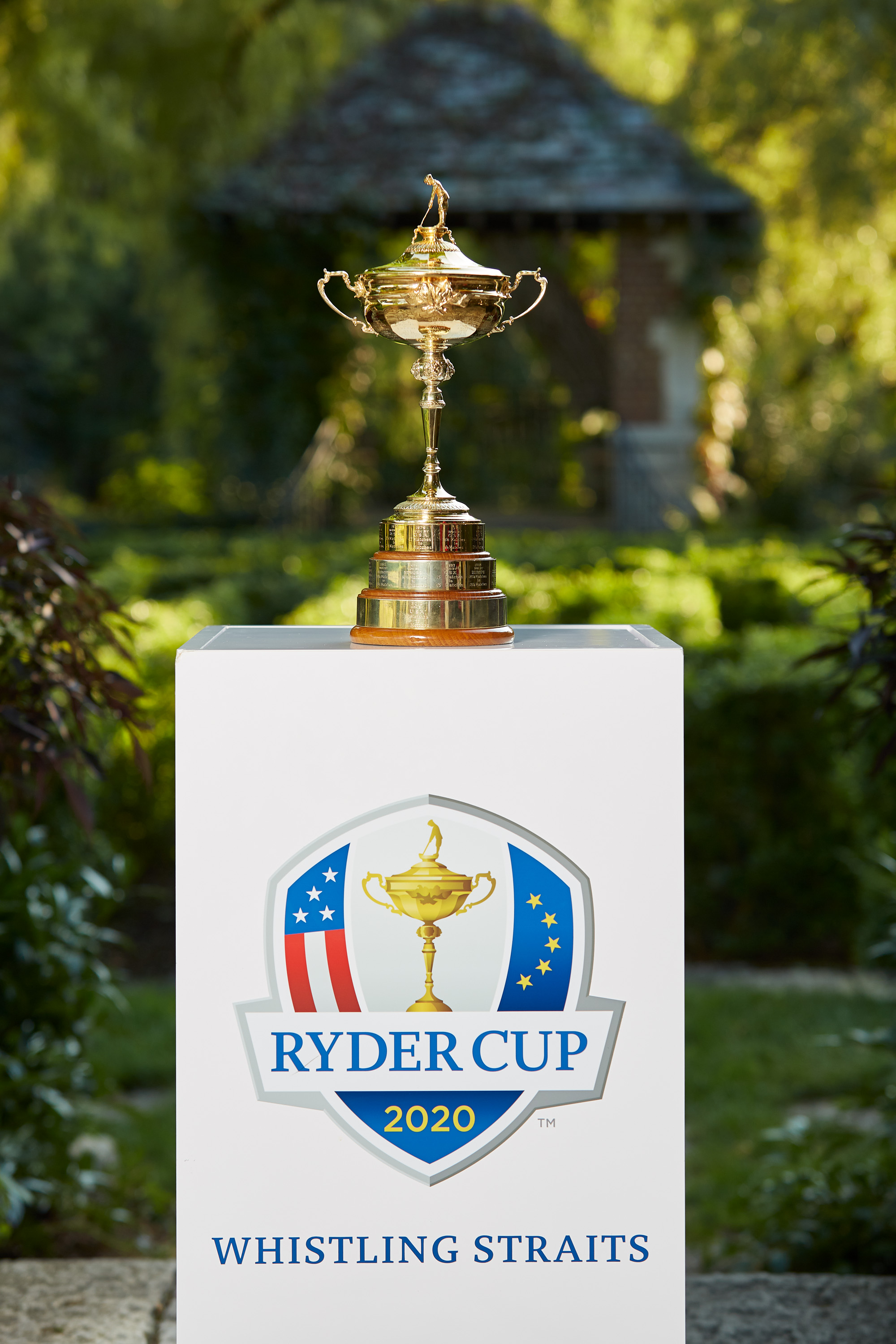
Kohler’s pro shops and gift shops are already stocked with merchandise bearing the logo of the 2020 Ryder Cup. The Ryder Cup itself was brought by as part of a nation-wide tour on Aug. 22 and more preview events will be held during and immediately after this year’s matches in Paris.

Director of golf Mike O’Reilly has no doubts Whistling Straits will be ready for its first Ryder Cup.

“It’s not like the Ryder Cup is our first rodeo – just our first Ryder rodeo,’’ said Mike O’Reilly, director of golf operations at both Whistling Straits and Blackwolf Run. He grew up in Darien and went to Downers South High School prior to beginning a 10-year run in Kohler as head golf professional in 2013. In addition to his present role with the Kohler courses O’Reilly is also on the executive committee for the 2020 Ryder Cup.

“The planning process for the Ryder Cup is similar to our PGA Championships, but everything is amplified,’’ said O’Reilly. “The number of volunteers needed is bigger. The number of spectators we can expect is bigger. The demand for tickets is elevated. While the number of people that will be here won’t be much bigger (than for the last PGA Championship in 2015), the demand for tickets will be much bigger. Unfortunately several thousand who want to purchase a ticket won’t be able to do that because the demand is so much greater.’’

In case you’ve forgotten what Ryder Cup fever was like prior to Medinah’s year as the host site, tickets to the matches don’t go on sale. The recipients are determined via a lottery. Those who want to be on hand for the action can file an interest form on line, and attendance will be limited to 40,000 to 45,000 per day. That was roughly the same size gallery as attended at Medinah and Minnesota’s Hazeltine layout – the last American site for the matches in 2016. Ticket prices haven’t been announced for the shootout at Whistling Straits.

The uncertainty of the lottery aside, the biggest problem for 2020 Ryder Cup patrons will be finding lodging. There’s more available than there was for the 2015 PGA Championship but, O’Reilly admits, “there’s certainly not enough.’’

“People will stay in roughly a one-hour radius and private home rentals will be off the charts for the Ryder Cup,’’ said O’Reilly. “What helps is that here you can park on site. You’re not taking a bus to the course. That’s a big advantage.’’

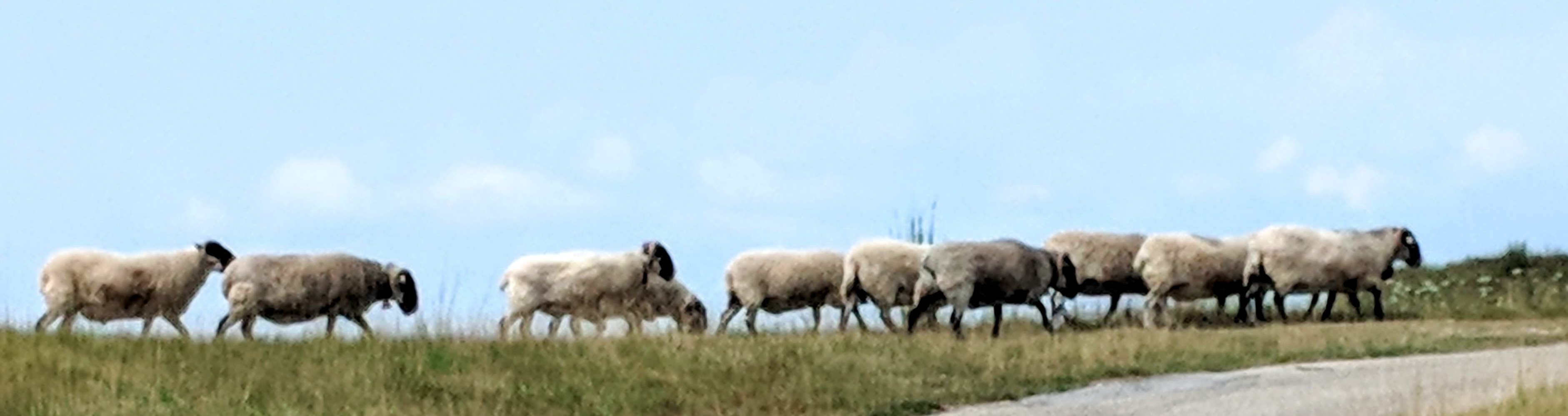
One Kohler attraction that won’t be at the Ryder Cup is the 22 black-faced Irish sheep that have roamed the fairways at Whistling Straights and the adjoining Irish Course. They’ll be removed for the Ryder Cup. Otherwise, it’ll be all systems go come 2020.

“The Ryder Cup will be one of the biggest sporting events in Wisconsin ever,’’ said O’Reilly. We’re trying to get as many people involved as possible.’’

The 22 sheep that have roamed Whistling Straits won’t be around when the Ryder Cup comes to town.

PGA Tour schedule for 2018-19 will require some fresh thinking

I did enough venting about this year’s tournament schedule in our last issue. Then – wouldn’t you know it? – the PGA Tour made its plans for the 2018-19 wrap-around season official. There’s lots of food for thought when you analyze that one.

Just knowing the PGA Tour dates isn’t enough to project how our next golf season will be received. The schedules for the USGA, LPGA, PGA Tour Champions, Web.com Tour and local attractions organized by the Western Golf Association, Illinois PGA and CDGA have to be factored in as well.

Still, having the schedule for the world’s premier tour available well in advance is most helpful and – from the overall standpoint – I like what I see. Locally I’m not so sure.

The key dates for Chicago area fans are July 8-14 for the John Deere Classic and August 12-18 for the BMW Championship. Despite massive shuffling of the PGA Tour schedule, the JDC remained in its spot the week before the British Open. While not every tournament organizer would be happy with that place on the calendar, it’s worked out well for the JDC.

Clair Peterson, the JDC tournament director, had a stroke of genius back in 2008 that is still paying big dividends. Rather than make the expected increase in prize money back then Peterson opted to hire a jet that would take players directly from the JDC to the British Open site. That enhanced the players’ view of the tournament and Peterson has continued with that offering every year since then.

Quad Cities was always a friendly place for the pros during tournament week and now – if indeed they wanted to go to the British – they could make the trip with less travel hassles and for a greatly reduced rate. Suddenly the John Deere Classic looked a lot more attractive. Louis Oosthuizen even opted to play there immediately prior to making his British title defense in 2011.

Now for the BMW Championship, the situation isn’t so rosy. The event remains a part of the FedEx Cup Playoffs, though the season-ending series has been reduced from four tournaments to three. The BMW is the second one, when the survivors will again be whittled from 70 to 30 for the season-ending Tour Championship at East Lake, in Atlanta.

The BMW, scheduled for Aronimink in Philadelphia this September, returns to the Chicago area at Medinah No. 3 in 2019. Chicago’s best tournament venue last hosted a PGA Tour event when the Ryder Cup matches were played there in 2012. A return to Medinah is always nice, though the club’s membership isn’t thrilled about losing at least of week of play on their top layout during the busiest part of its golf season. The club agreed to host the tournament when it was held in September.

Also, not to be ignored, is the fact that BMW’s contract to sponsor the tournament concludes after the 2019 event. As of this printing there’s no hint of a contract extension being in the works, and the Western Golf Association has no site booked beyond Medinah.

Chicago clubs willing to give up their course in August won’t be as plentiful as the number that would be agreeable in the fall. So, the event is somewhat in limbo.

Also a cause for concern is the status of the PGA Championship. It’ll end its long fall run at Bellerive in St. Louis this month, then move up to May 13-19 in 2019. The move will help the PGA (my prediction, though not all pundits agree) in the form of visibility but May dates will also make it difficult to get that major championship back to Chicago – or any place in the Midwest –in future years. Why would the PGA want to risk scheduling its premier event in an area with dubious spring weather?

In its fall dates the PGA has been the one major that has been receptive to coming to Midwest venues. In addition to Bellerive, that tournament was played twice at Medinah since 1999 and also had two stagings at Whistling Straits in Wisconsin in that period. In case you didn’t know, no major championship (USGA, PGA of America, LPGA, PGA Tour Champions) has been scheduled in Chicago in the future. Last month’s Constellation Senior Players Championship at Exmoor will most likely be the last for quite awhile – and that’s a shame.

While other tournament dates for next year haven’t been announced, the closest major will be the U.S. Senior Open, which is scheduled for the Warren Course in South Bend. The KPMG Women’s PGA Championship, played at Chicago area courses (Olympia Fields and Kemper Lakes) the last two years is headed for Hazeltine, in Minnesota, in 2019.

Getting back to the PGA Tour, the schedule will have only 46 tournaments compared to the 49 in the 2017-18 campaign. There’ll be two new evens in the Midwest, both in the two weeks leading into the John Deere Classic. Detroit finally gets back on the circuit with the Rocket Mortgage Classic at Detroit Golf Club from June 24-30 and the Minneapolis area gets still another boost to its golf profile with the 3M Open coming to the Twin Cities from July 1-7. This season the area had a Champions Tour event under that sponsorship.

The main goal of the revamped schedule was to enhance attention on the FedEx Cup Playoffs. Now, instead of September, they’ll be completed on Aug. 25. That means the climax to the golf season won’t be encumbered by competition for attention from the National Football League, Major League Baseball and the Stanley Cup or NBA playoffs.

Golf’s majors will also be better spread out in the new schedule. The Players Championship, which should have been designated a major years ago, will move back to March and Florida weather should be acceptable that early in the year. Then there’s a major a month – the Masters in April, PGA Championship in May, U.S. Open in June and British Open in July. That’s an ideal lead-in to the FedEx Cup Playoffs.

And, there will still be tournament golf played after those playoffs. The PGA Tour slate for 2019-20 will begin a week or two after the President’s Cup (not yet officially scheduled) is played.

Golf has proven to be a tonic for this Parkinson’s sufferer

Gary Smith, by his own admission, is not a champion golfer but his golf story is well worth telling. Tim Rosaforte, a long-time friend of mine who works for The Golf Channel, told it first as a TV feature. Now it’s my turn.

Smith is a Naperville resident, but I met him at the International Network of Golf’s Spring Conference in Biloxi, Miss., in May. He was a featured speaker there and provided a compelling report on what golf has done for him.

In short, golf served as an effective treatment for Parkinson’s disease. That’s a neurodegenerative brain disorder that has very negative life-changing effects for its victims. Smith was diagnosed with it in 2008, but suspects he had symptoms as many as five years before that. His father had died of the disease the same year that Gary was diagnosed with it and his father had battled it for 22 years. Gradually the disease took its told on Smith as well.

“My life was really getting dark,’’ he said. “My dexterity was gone. I had tremors. I was walking very slowly. My voice was wispy. Basically my life was not good.’’

He lost most of his ability to smell and taste. He felt strange aches and pains and his energy level was dropping off. He was barely able to walk his daughter Morgan down the aisle at her 2010 marriage.

This was especially painful, given the active lifestyle Smith had led prior to the devastating diagnosis. He played basketball and baseball in high school and college and was a skydiver for 20 years. He once para-glided off a 3,800-foot cliff in New Zealand. In his fifties he was a surfer and ran a marathon on his 55th birthday in 2011.

Married with three children, Smith had worked as a psychotherapist, then took on a second career as a loan officer. He continued to work for seven years after getting his Parkinson’s diagnosis before retiring on his 60th birthday in 2015. He wanted to play more golf then, mainly because his wife Nan liked to play the game.

Smith tried other forms of exercise, and some would work for a while, but he came to the realization that “everything goes slow.’’

“My kids said `Please don’t quit’ and I kept looking for exercises,’’ said Smith. “My son said I should go to TopGolf.’’

That fast-growing franchise has a facility in Naperville, and Smith hit lots of golf balls there – up to 1,000 a week.

When Smith turned 60 he and Nan took a trip to Scotland, and she encouraged him to play a round at the famous Old Course at St. Andrews. Using rental clubs, he got through that round and was inspired by the experience. That led to more sessions at TopGolf when they returned to Naperville.

“When we got back there was some freakish weather, temperatures in the 50s,’’ he said. “I started walking (in rounds at Naperbrook and Springbrook, Naperville’s public courses). I was confused. I felt good because I was walking. But it wore me out.’’

Eventually the Parkinson’s symptoms went away. After five weeks he could walk more upright and actually stride, rather then just shuffle his feet. His right foot and arm had been stiff. They started to loosen up. He could type with his right hand again and manage facial expressions. His voice got stronger, too.

Now 63, he usually walks his 18-hole rounds and has done as many as 36 holes in a day. His handicap also dropped from 24 to 10.

Initially Smith felt his “recovery’’ wasn’t the real thing, just a carryover from the St. Andrews experience. His neurologist, Dr. Martha McGraw at Northwestern Medicine Center DuPage Hospital in Winfield, had her doubts as well until Smith demonstrated his regained walking ability at her office.

She declared him back to his pre-Parkinson’s fitness level. Though Smith couldn’t understand his recovery either, he was determined to take his message to others who suffer from the disease. He’s trying to raise money for the Parkinson’s Foundation to fund a scientific study on the potential benefits of golf for Parkinson’s patients.

While he’s thankful for his improved health, Smith still has concerns his old symptoms might return.

“Every day I wake up I just wonder if this will wear off,’’ he said, “but so far, so good.’’

We will all have to deal with `THE BIG CONFLICT’

This is my 50th year reporting on the Chicago golf scene and I can assure you there has never been a month like the one confronting us this July. There have been busy tournaments times in the past, but never anything like what’s coming in the next few days.

I’m calling the whole scenario “The Big Conflict,’’ and I’m not happy about it.

Everything kicks in during the second week of July, but especially on Thursday, July 12. That’s the starting day of competition for the PGA Tour’s John Deere Classic at TPC Deere Run in downstate Silvis.

That’s also the day that the Constellation Senior Players Championship tees off at Exmoor Country Club in Highland Park. This is one of the five major championships on the PGA Tour Champions circuit. It’s a big deal.

And that’s not all. The inaugural U.S. Senior Women’s Open starts its 72-hole run at Chicago Golf Club in Wheaton on July 12 as well.

Three very big tournaments, all of them played over the same four-day period. The John Deere Classic is the only annual PGA Tour stop in Illinois with Bryson DeChambeau coming in as the defending champion with $5.8 million in prize money on the line.

The Constellation Senior Players Championship is the first major on the 50-and-over circuit played in the Chicago area since the U.S. Senior Open was contested at Olympia Fields in 1997. With no other major championships on any tour scheduled in the Chicago area this could be the last chance to see the Champions Tour’s dominant player, Bernhard Langer, and Chicago’s own Jeff Sluman compete on home turf.

And the U.S. Senior Women’s Open – a long-awaited and long overdue event organized by the U.S. Golf Association – means a chance to see legends like Pat Bradley, Juli Inkster, Meg Mallon, Jane Blalock and Betsy King in competition again. Plus, the tournament offers a rare opportunity for spectators to get inside the gates of the North America’s oldest 18-hole golf course. Chicago Golf Club last opened its doors to spectators for the 2005 Walker Cup matches.

While Chicago Golf Club is old – it dates back to 1892 – the tournament that it will soon host is the USGA’s newest national championship. It’ll have 120 of the best women players who have reached the 50th birthday. They’ll be playing on the same course that hosted three U.S. Opens (1897, 1900 and 1911), four U.S. Amateurs (1897, 1905, 1909 and 1912), the 1903 U.S. Women’s Amateur and the 1979 U.S. Senior Amateur. It was only fitting that Chicago Golf Club be the site for the first U.S. Senior Women’s Open. It’s just too bad that the tournament will have to share the spotlight when it’s here.

The only time I can recall anything close to this weird bit of scheduling was in 1975, when the USGA and PGA Tour opted to schedule big tournaments back-to-back. The U.S. Open was played at Medinah one week and the late, great Western Open was contested the following week at Butler National in Oak Brook.

Such high-profile events were never scheduled so close together in the same geographical area back then. It was simply taboo. There were concerns then that golf interest – including that of potential sponsors – would wane if tournament play was stretched out too far.

As things turned out, there was only a minimal break in the action then. The ’75 U.S. Open carried over to Monday, with Lou Graham beating John Mahaffey in a playoff to decide the title. Three days later Hale Irwin started his run to the Western title on one of the most difficult courses in the country.

Somehow, that glut of golf 43 years ago worked out okay. In fact, it was the start of big things for Irwin. He earned the moniker of “Mr. Chicago’’ as he went on to win the 1990 U.S. Open at Medinah in the tourney’s first-ever sudden death playoff against Mike Donald and then captured the Ameritech Senior Open three times. That tourney was a fixture in Chicago back then, with Irwin winning in 1995 at Stonebridge in Aurora and 1998 and 1999 at Kemper Lakes in Kildeer.

This year’s strange scheduling is a little different than that of 1975. In any other year any one of those three tournaments would be considered the highlight of the Chicago golf season. This year, I’m afraid, the interest in each one will be diluted.

Frankly I’d like to see every round of all three tournaments, but obviously I can’t. You can’t be in two – or three – places at once. As of this writing – a few weeks before the firing begins on July 12 – I don’t know where I’ll be or when. But I guarantee you I’ll be keeping tabs on all of those events.

Unfortunately, after “The Big Conflict’’ is over a smaller version will begin. On July 16, the day after the John Deere Classic, Constellation Senior Players Championship and U.S. Senior Women’s Open all wrap up, the focus shifts to state competitions.

The Illinois Women’s Open begins at Mistwood, in Romeoville, the day after “The Big Conflict’’ and the day after that the Illinois State Amateur tees off at Bloomington Country Club. Both are three-day tournaments, the IWO ending on Wednesday, July 18, and the State Am on Thursday, July 19.

When all is said and done there’ll be eight consecutive days of very meaningful tournament golf at both the professional and amateur levels. Multiple tournaments will be played on seven of those eight days.

Obviously the schedule-makers from the various golf organizations could have done a better job communicating with each other in choosing dates for their 2018 championships. While tournament conflicts are sometimes inevitable, this year’s scenario defies the imagination.

There’s no point in getting into the blame game on this issue. The tournaments will all be played on the dates announced, and they’ll all be good. I just hope we never have to go through something like “The Big Conflict’’ again.

Mistwood, Kemper Lakes host big women’s tourneys at the same time

It’s a shame, it really is.

In the biggest year ever for women’s golf in the Chicago area the biggest women’s professional tournament and the biggest women’s amateur event will be played on virtually the same dates.

The KPMG Women’s PGA Championship is June 26 to July 1 at Kemper Lakes in Kildeer. It’s one of the five annual majors for women on the Ladies PGA Tour. The Women’s Western Amateur, a national championship that’s been played for 117 years, is June 26 to 30 at Mistwood in Romeoville.

Mistwood is the first public facility to host the tournament since 2007 when another Illinois layout, Stone Creek in Urbana, was the site. Stone Creek also hosted in 2003 and two other public courses – The Links at North Fork in Minnesota and Purdue University’s Kampen Course in Indiana – have also been the tournament’s venue since 1995.

As for this year, there are other key dates for the top women players within the Chicago area. The Illinois Women’s State Amateur is June 11-14 at Aldeen, in Rockford. The Illinois Women’s Open is July 16-18, also at Mistwood, and the first-ever U.S. Senior Women’s Open is July 12-15 at historic Chicago Golf Club, in Wheaton.

Unfortunately the U.S. Senior Women’s Open is impacted by scheduling conflicts every bit as unfortunate as those impacting the Women’s Western Amateur. Also holding dates on July 12-15 are the PGA Tour’s John Deere Classic, in downstate Silvis, Ill., and the Constellation Senior Players Championship, one of the five majors on PGA Tour Champions, at Exmoor in Highland Park.

Still, that’s a great load of fine women’s golf, so there’s no sense belaboring the poor scheduling. It’s way too late to change anything anyway, but it’s an ideal time to focus on the Women’s Western Amateur. This venerable championship is in a state of flux – and that’s not to suggest it’s a bad thing.

The Mistwood staging marks the end of an era. The 2019 tournament will be the first time the Western Golf Association and Women’s Western Golf Association have formally worked together on a tournament in over 100 years. The WGA was the initial sponsor of the Women’s Western Amateur in 1901, before the women organized their own association in 1903.

That’s not to say they haven’t worked together since then. The WGA has provided administrative support to WWGA championships since 2012. The Women’s Western Golf Foundation was founded in 1971 and has distributed more than $4.1 million scholarship awards to over 700 young women from 45 states and the two organizations jointly sponsor a Women’s Western Evans Scholar, awarding a four-year tuition and housing college scholarship to a female caddie who excels academically, has an outstanding caddie record and demonstrates financial need.

Effective on Aug. 1, 2018, however, the WGA and WWGA are forming a partnership in which the WGA will formally assist in managing WWGA championships.

“Having their help will have such a positive impact,’’ said Susan Wagner, who has served the WWGA in many capacities non-stop since 1977. “We’re looking forward to working with the Western.’’

This is a transition year, though. There’s no doubt about that. The Women’s Western Amateur is undergoing a format change, the first that Wagner can recall since the format for the championship match was changed from 18 to 36 holes in 1992. It’s being made in part to set the stage for 2019.

For the first staging at Mistwood the tournament will be limited to 120 players, based on the lowest handicap index. Last year the field was limited to 144 players.

As per previous years there’ll be a 36-hole qualifying session spread over two days to determine the match play qualifiers. In previous years the low 64 qualifiers went to match play. This year the number will be only 32, and there will be playoffs if there are ties for the 32nd position.

In previous years the players who didn’t qualify for the championship flight of match play would be flighted into lower level flights. This year there will be only the one flight. How well that will be received by the players remains to be seen but it does more closely resemble the format used in the Western Amateur men’s event that will be played at Sunset Ridge, in Northfield, from July 30 to August 4.

In the Women’s Western Amateur there will be three days of match play with two rounds on both Thursday and Friday, June 28 and 29, leading into the 36-hole championship match on Saturday, June 30.

The field will be stellar, as usual. Maddie Szeryk, last year’s winner, will not defend her title. She will be playing in the Ladies British Open in England instead, but her sister Ellie will be competing at Mistwood.

With the entry deadline still days away the field already included at least four prominent Chicago players – 2017 semifinalist Nicole Ciskowski, 2016 Western Junior champion Kate Lillie and 2016 Western Junior runner-up Penelope Tir. Jessica Yuen, who developed a solid game growing up at Mistwood and competing for Nequa Valley High School, will also be in the field. She is now a sophomore standout at the University of Missouri.

Another player to watch is 57-year old Ellen Port, the women’s coach at the University of Washington and a former WWGA director. She has won seven U.S. Golf Association championships. Players from 15 states and eight countries were among the early entries.

While nothing is official the 2019 Women’s Western Amateur is expected to be played again in the Chicago area, at a course to be determined.

In case you missed it, there are other indications that Chicago is becoming a hotbed for women’s golf. Both Illinois and Northwestern earned berths in the NCAA Division I tournament and Elizabeth Szokol, a Winnetka resident who attended Northwestern for two years before transferring to Virginia, won a tournament on the LPGA’s Symetra Tour.

Szokol, in the second tournament of her second season on the Symetra circuit, earned $22,500 for her victory in the IOA Invitational in Georgia. Szokol is the first Chicago area player to win a Symetra Tour event since the circuit was designated as the official developmental tour of the LPGA in 1999.

KPMG Women’s PGA will be Kemper’s biggest event in 29 years

This spring has not been business as usual at Kemper Lakes. The Kildeer club, which had been a tournament hotbed for more than two decades before going private, has been a busy place again even during the period when snow delayed the traditional start of spring.

That’s what happens when a club takes on a major championship. Kemper will host its biggest tournament in 29 years when the KPMG Women’s PGA Championship activities begin on June 26. The four tournament rounds in the $3,650,000 championship are June 28 through July 1.

It’ll be the third of the five designated major championships for the Ladies PGA Tour in 2018. The ANA Inspiration was played in April in Rancho Mirage, Calif., with Sweden’s Pernilla Lindberg winning the title in a three-way playoff with South Korean Inbee Park and American Jennifer Song. The U.S. Women’s Open runs May 31 through June 3 at Shoal Creek in Alabama.

After the KPMG Women’s PGA Championship comes the Ricoh Women’s British Open from Aug. 2-5 in Lancashire, England, and The Evian Championship from Sept. 13-16 in France. The U.S. Women’s Open is the oldest of the five majors, having been first played in 1950, and it has the biggest purse at $5 million.

The KPMG dates back to 1955 when it was know as the LPGA Championship. The ANA Inspiration started in 1983, the Ricoh Women’s British Open in 2001 and The Evian Championship in 2013.

Before that the designated women’s majors included the Titleholders, which was last played in 1972; the Women’s Western Open, which bowed out in 1967; and the duMaurier Classic, which ended its run in 2000.

Last year, in a scheduling rarity, the KPMG Women’s PGA Championship was played at Olympia Fields in Chicago’s south suburbs. Other than the Masters, a major championship is rarely played in the same area two years in a row. That’s what’s happening with the KPMG Women’s PGA Championship, however.

Just this man’s opinion, but the tournament will be bigger and better in the move to the north. For one thing, Kemper’s membership is excited about the club’s return to the world spotlight after being away from it for too long. The only bigger event ever held at Kemper was the men’s PGA Championship in 1989.

Last year’s tourney at Olympia Fields came out just fine, but hosting big tournaments is old hat for that club. Kemper’s membership will benefit from last year’s experience at Olympia because many could view what went on there first hand. It’s certain to be a great show with the club receiving long-term benefits from it.

The 2019 KPMG Women’s PGA Championship will be contested at Hazeltine, the Minnesota course that hosted the last Ryder Cup matches and also was the site of multiple U.S. Opens and PGA Championships. That means a profile boost for Kemper Lakes, which will be joining some select company in hosting this year’s tourney.

Acting together, Kemper’s members made one decision that will spice up this year’s event. They decided to give a name to their course’s three-hole finishing stretch – certainly the most difficult on the Chicago golf scene and one of the toughest stretches in the country.

On the men’s PGA Tour side there are plenty of courses with catchy names for their most prominent holes. Augusta National has its Amen Corner. PGA National has its Bear Trap. Innisbrook’s Copperhead has its Snake Pit. Now Kemper Lakes has The Gauntlet. It encompasses the par-4 16th (which has my vote as the most difficult hole on the course), the short 17th (a par-3 with an island green) and the sharp dogleg left par-4 at No. 18. – a good hole for viewing throughout.

Club officials asked for suggestions to name the fearsome finishing stretch, then the list was narrowed to three or four for a members’ vote. The Gauntlet won out, and a big rock has been put near the No. 16 tee to mark the start of it. More decorations will be forthcoming.

“But the whole course is really challenging,’’ said head professional Jim Billiter, the reigning Illinois PGA Player of the Year. “The ladies will love it.’’

Though none have visited Kemper Lakes yet, some may have an inkling of what lies ahead because the tournament staff – headed by tournament director Jackie Endsley and head of operations Eric Nuxhol – have been working out of a trailer in the club parking lot for several months. Bleachers, merchandise and food tents and other on-course necessities will be constructed beginning in late May.

Billiter’s lifestyle also took on a new look because of the tournament. As an assistant pro at Merit Club in Libertyville he got a taste of what tournament preparations required when the UL International Crown – an LPGA team competition – was played there in 2016. The Crown was a new event, and the KPMG Women’s PGA Championship is on a much bigger scale.

Whereas winter golf trips were commonplace for Billiter in past years, he couldn’t leave town much this time.

“It’s been a lot of work buying items for the merchandise tent,’’ he said. “We want to do well. We want to make money for the club and the members and put on a good show for KPMG, and we’re ahead of the game.’’

He fears that the time spent on preparation for the KPMG tourney might negatively impact his title defense in the Illinois PGA Match Play Championship, which will be played at Kemper from May 7-10.

“This winter I was tied up a bit,’’ he said. “In years past I made up to six trips in the winter, with members or for tournament series. This year I made just one, so my (playing) expectations aren‘t as high for this year. Still, this has been a fun, learning experience.’’

The tournament will be fun, too, as it will bring the best women golfers in the world back to Chicago. Former champions include Louise Suggs, Mickey Wright, Betsy Rawls, Kathy Whitworth, Nancy Lopez, Jan Stephenson, Pat Bradley, Beth Daniel, Betsy King, Juli Inkster, Karrie Webb and Annika Sorenstam.

Last year Danielle Kang captured her first title at Olympia Fields, which proves that a big name doesn’t always win this big tournament. Let the firing begin.

Here’s what’s good — and bad — about the Chicago tournament schedule in 2018

I don’t know that Chicago has ever had a golf season like the one coming up in 2018. It’ll be a good one – any links season in Chicago is a good one – but this one will be different.

Last year’s tournament schedule was the busiest in 20 years and featured the national collegiate championships, a U.S. Open and an LPGA major championship. This year’s schedule will be attractive, too, and every bit as busy — but it might not seem that way. Here’s why:

One week in June and another in July will be overloaded with big tournaments. Call it unfortunate scheduling if you will, but that’s just the way it is. Chicago golf fans have always supported big tournaments, and I have no doubt that they will again. This time, though, it will be a challenge.

The first week with a scheduling dilemma comes at the end of June, and it’s all about the women. Their biggest amateur tournament of the year and the biggest professional tournament of the Chicago season will be held on virtually the same dates. The 118th playing of the Women’s Western Amateur starts on Monday, June 25, and concludes with a championship match on Saturday, June 30. The KPMG Women’s PGA Championship returns for another 72-hole run, with competition starting on Thursday, June 28, and concluding on Sunday, July 1.

My advice? Find a way to attend them both. Mistwood, the Romeoville course that will host the Amateur, and Kemper Lakes, the Kildeer layout that hosts the KPMG tourney, are not exactly strangers to big events but these will be breakthroughs at both locations.

The Amateur will be the biggest event ever held at Mistwood, the annual site of the Illinois Women’s Open. It’ll also be the first time the Western Golf Association manages a women’s event and one of the few times it conducts a championship on a public course.

Kemper Lakes was a tournament hotbed shortly after it opened as a public course in 1979. Big events weren’t on the club’s calendar after it began its transformation to a private in 2003, but the KPMG Women’s PGA Championship – held last year at Olympia Fields – will bring a welcome end to that drought.

Mistwood will feature the best players of the future, Kemper the best in the world. It would seem a no-brainer to catch the two stroke-play qualifying rounds that kick off the Women’s Western Am, then shift your attention to Kemper Lakes while also catching a key match in the Amateur event before the week is out.

In its tournament heyday Kemper hosted the 1992 U.S. Women’s Amateur, which concluded with the legendary Annika Sorenstam in the championship match – and that was one of the few she didn’t win. Her loss to Vicki Goetze lives on as one of the great moments in Kemper history.

A solution to the scheduling dilemma coming up two weeks after the big women’s week isn’t so easy to solve. The week beginning on Monday, July 9, features three big tournament offerings including the only PGA Tour stop in Illinois in 2018. (The BMW Championship completed its three-year run at Conway Farms, in Lake Forest, last September and the BMW won’t return until 2019 at Medinah).

Unlike the two-tournament women’s week, the competition days of the three July events are directly opposite each other. The John Deere Classic runs July 12-15 at TPC Deere Run in downstate Silvis. Those are also the tournament dates for the Constellation Senior Players Championship – one of five majors on PGA Tour Champions – at Exmoor, in Highland Park, and the first-ever U.S. Senior Women’s Open, a national championship that led to a rare opening of the gates to historic Chicago Golf Club. The nation’s first 18-hole course hasn’t hosted an open-to-the-public event since the Walker Cup matches of 2005.

How does a golf spectator solve this overload of riches? I have no idea. Entering my 50th year reporting on Chicago golf tournaments, I’ve never had a challenge like this one. I don’t even know where I’ll be each day of that week — but I will be at each of the three events for at least a day, I promise.

As for the rest of the year, the events that bear watching are fortunately spread out a bit.

The first that will draw some spectators is the 67th Illinois PGA Match Play Championship, which is also at Kemper Lakes. A fixture at that club in recent years, the tournament runs May 7-10, concluding on the day that the PGA’s high-profile Players Championship tees off at Florida’s TPC Sawgrass.

If you want a Champions Tour warmup for the Exmoor visit, the Senior PGA Championship returns to Michigan’s Harbor Shores from May 24-27. The Web.com Tour is back for a third straight year, with the Rust-Oleum Championship at Ivanhoe Club June 7-10 – a week before the U.S. Open at Shinnecock Hills in New York.

Then, on successive weeks, comes the Illinois State Women’s Amateur at Aldeen, in Rockford, and the CDGA Amateur at Briarwood, in Deerfield.

The big three-tournament week in July will be immediately followed by the Illinois State Amateur at Bloomington Country Club and the Western Amateur at Sunset Ridge, in Northfield, tees off 10 days after that.

In August the 69th Illinois Open, — Aug. 6-8 at The Glen Club, in Glenview and a second course still to be announced — leads directly into the 100th playing of the PGA Championship at Bellerive, the premier club in the St. Louis area.

August wraps up with the 96th playing of the Illinois PGA Championship at the only public facility in the event’s three-tourney rotation — Stonewall Orchard, in Grayslake. That pretty much will bring an end to the Chicago tournament season and it’ll be a bit earlier finish than most years.

Had enough already? By the time all those events are over it’ll be time to squeeze in as many rounds as possible before cold weather returns. One thing to note, though. This year’s condensed schedule should be expected again in 2019 when the PGA Tour makes radical shifts in its schedule in order to finish the bulk of it by Labor Day. Anything the PGA Tour does generally has an impact on Chicago play in one way or another.

Women’s Western will benefit from closer relationship with WGA

This one was long, long overdue.

The Western Golf Association and Women’s Western Golf Association have jointly announced that they have formed “a new partnership.’’ That made May 10, 2017, an announcement date to remember in Chicago sports history. Given the rich histories of the two organizations, its importance goes beyond just golf.

While the new agreement doesn’t kick in until Aug. 1 – which is after the WWGA’s two 2017 tournaments – it does have the potential for some great things that could be coming to golf in Chicago as soon as the 2018 season.

Few organizations in anything have lasted as long as the two Chicago-based golf groups. The WGA was founded in 1899, the WWGA in 1903. Prior to the women forming their own organization the WGA sponsored the first two Women’s Western Amateur Championships in 1901 and 1902.

Despite their similarities in name and purpose, the two groups have operated more or less independently most of the time since then. They formed a loose partnership in 2011 and the WWGA conducts its board meetings at WGA headquarters in the North Chicago suburb aptly named Golf. That doesn’t come close to having the impact the new five-year agreement will have, however.

Under the new agreement the WGA will “help guide the Women’s Western Golf Foundation’’ and “help stage and promote the WWGA’s Women’s Western National Amateur Championship and the Women’s Western National Junior Championship and secure host sites for the events.’’

These are changing times, and the new agreement in no way detracts from all the great things the women’s group has accomplished in its 116 years. Operating with all volunteers the WWGA put on not only its two continuing championships but also ran an LPGA major tournament, the Women’s Western Open, from 1930 until 1967. The Women’s Western Amateur is the oldest annually played championship in all of golf.

Organizational demands, though, have grown over the years and the 2011 agreement with the WGA did provide the women with some administrative support. Still, more is needed.

The WWGA will operate the same as last year for its two 2017 events – the 117th Women’s Western Amateur June 12-17 at River Forest Country Club in Elmhurst and the 91st Women’s Junior Championship July 10-14 at Dubuque Golf and Country Club in Iowa. Then the WGA takes on managerial duties just as it has long done with its three tournaments – the PGA Tour’s BMW Championship (an offshoot of the old Western Open), the Western Amateur and the Western Junior.

First order of business will be for the WGA to name a site for the next WWGA tournament. No site has been determined for the 2018 Women’s Western Amateur but WGA staffers hope to announce one during the tournament at River Forest and some Chicago clubs are under consideration.

The stop at River Forest was the tournament’s first staging in the Chicago area since Exmoor, in Highland Park, hosted in 2001. Though no official comments were made, the off-the-record sentiments of Western staffers was that the tournament should be basically a fixture in the Chicago area much like the WGA’s Western Amateur has been since the tourney left Point O’ Woods in Benton Harbor, Mich., after a 28-year run there ended in 2008.

Chicago area courses have hosted eight of the nine Western Amateurs played since then and Skokie will be the site of the 2017 championship from July 31 to Aug. 5. The WGA also has reaches a milestone tournament-wise this year when its Western Junior is played for the 100th time. Park Ridge Country Club will be the site from June 19-22.

Both organizations are delighted with the new agreement.

“The history between these two golf associations goes back to the beginnings of the Women’s Western Golf Association. We have had a great relationship with the Western Golf Association through the years,’’ said Frances Fleckenstein, the WWGA president. “We now look forward to taking the next step to having their full support, which will be beneficial to both our organizations.’’

David Robinson, the WGA chairman, feels the same way.

“We’re excited to be deepening our relationship with the WWGA, which has done so much in the Midwest and across the country for women’s golf,’’ he said. “It’s an organization whose values and storied history of championships and scholarships are very much aligned with our own.’’

The WGA’s Evans Scholars program had 935 students enrolled in 20 universities during the 2016-17 school year and 24 percent were women. The Women’s Western Golf Association Foundation, founded in 1971, has awarded more than $3.5 million in scholarships to more than 690 young women from across the country over the years.

Already the two organizations jointly sponsor a Women’s Western Evans Scholar, awarding a four-year tuition and housing college scholarship to a female caddie who excels academically, has an outstanding caddie record and demonstrates financial need. The current Women’s Western Evans Scholar is Hannah Gillespie, who is completing her freshman year at Notre Dame.

And all those good connections lead to the inevitable question: Can there be a Women’s Western Open again?

The Women’s Western Open had a history as rich as the men’s Western Open. It was first played 20 years before the formation of the Ladies PGA Tour, and the LPGA had the support of the WWGA at the time of its founding.

Two Chicago players – Lucia Mida of Butterfield and June Beebe of Olympia Fields – played in the title match of the first Women’s Western Open, Mida winning at Acacia in Indian Head Park – a club that no longer exists. The tourney continued under a match play format through 1954 with 11 of the 24 tournaments played on Chicago courses. The last of those was at Glen Flora, in Waukegan.

Then the tourney went to a stroke play format from 1955 to 1967 and Chicago’s Beverly Country Club hosted twice. The event’s last playing was at another Illinois course, Pekin Country Club, where Kathy Whitworth won the title with a record 11-under-par performance. Years after the event was discontinued it is still considered a major championship in women’s golf history.

Quoting the WWGA tournament histories in its 2016 annual publication, the Women’s Western Open was discontinued “when the WWGA concentrated all its efforts to support and promote amateur women’s golf.’’

Now might be a good time to change that line of thought. The WGA has benefitted from being involved in the pro game, why not the women as well?

No one in a leadership role at either the Western Golf Association or the Women’s Western Golf Association will predict a revival of the Women’s Western Open, but they won’t rule it out, either. Be sure to stay tuned.