
 It’s time to stray away from golf and revive Book Report duties.
The strange-looking face on his page is that of James Creighton. His picture isn’t sharp because cameras weren’t of the same quality in 1860 as they are these days.Gilbert wrote a recently-published book, “Death in the Strike Zone,’’ to make the case that Creighton was “America’s first baseball hero.’’
Creighton was the star pitcher for the Brooklyn Excelsiors, and it’s a good thing that Gilbert brought his story to light because no one else has told it. No question Creighton was a great player. In his playing career he was called “unhittable.’’ He had a blazing fastball in addition to – according to Gilbert – was the first pitcher to throw a curveball.
He stood only 5-7 and weighed 150 pounds. Gilbert claims that Creighton “changed baseball more than Babe Ruth did.’’ Like Ruth, he excelled as both a pitcher and a hitter. Creighton, however, isn’t in the Hall of Fame and never played a game of professional baseball. He pitched baseball’s first shutout and his youth teams beat the best of the adult teams. Not only that, but Creighton was a star in cricket, too.
So, how could Creighton be so good? His playing career was a short one. He pitched against the best players in his era at the age of 14 and died from a rare illness in 1862 at age 21.
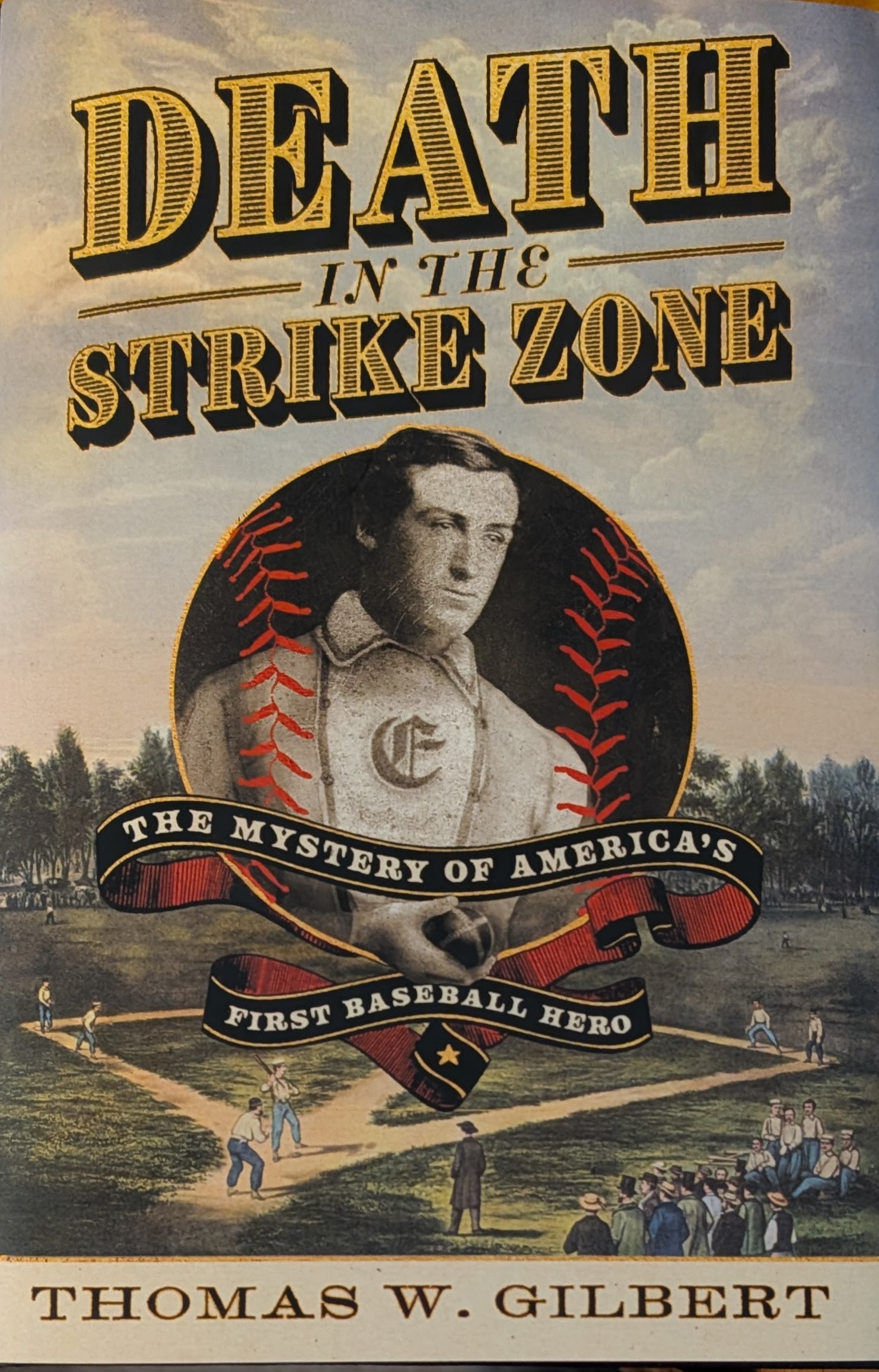
I was as skeptical as most of you probably are when Gilbert called him “baseball’s first phenom.’’ He probably was, though, and there’s a good reason why.
The game he played wasn’t baseball – at least not the baseball as we now know it. Pitchers threw underhanded in Creighton’s day. Balls and strikes weren’t called. Hurlers wanted batters to make contact with their pitches. Balls could be caught on one bounce for an out. All fielders played barehanded. So did catchers, who also didn’t have facemasks, shin guards or padding of any kind.
The Excelsiors’ main rivals were called the Knickerbockers, Atlantics, Eckfords, Esculapians and Niagaras. Most were from New York and all were considered amateur teams. That didn’t change much until 1876 with the formation of what is now the National League.
“Death in the Strike Zone’’ is really more about the baseball scene before the Civil War ended the games for a few years. Gilbert’s book is thoroughly researched with much more than just the feats of Creighton. There needed to be a starting point for baseball, and the pre-Civil War era was it. Gilbert provided a fascinating account on what it was like back then.